Need help choosing the best grant management software for you? Read this post to learn about what factors you should consider, as well as some of the best options available out there for you.

TOPIC
AUDIENCE
Managing grants shouldn’t feel like a game of whack-a-mole, but for many nonprofits, it does.
Between tracking deadlines, coordinating proposal drafts, managing compliance, and reporting on outcomes to multiple funders, grant work quickly becomes scattered across spreadsheets, email threads, and shared drives. As funding sources grow more complex and competitive, these fragmented systems create real risk: missed deadlines, duplicated work, and lost opportunities.
That’s where grant management software comes in.
In this guide, we’ll explain what grant management software is, how it supports the full grant lifecycle, and why more nonprofits are moving to centralized systems to manage grants more strategically. We’ll also compare leading tools and share what to look for when choosing the right solution so your team can stay organized, compliant, and focused on securing funding.
Let’s dive in!
Grant management software (also called a grant management system or grants management system) is a centralized platform that helps nonprofits track, organize, and manage key parts of the grant lifecycle.
While the features vary from product to product, these tools generally support common grant-seeking needs such as:
This matters because the funding landscape is incredibly complex. Grant opportunities come from federal agencies, state and local governments, private foundations, and corporate funders—each with their own rules, timelines, and requirements.
A modern grant management solution helps nonprofits navigate this complexity by consolidating deadlines, tasks, attachments, and funder requirements into a single, reliable system.
Managing grants successfully requires visibility and coordination across several stages:
When organizations rely on spreadsheets, these stages often become disconnected. Information lives in multiple versions, deadlines slip through cracks, and teams struggle to keep funder requirements organized. A dedicated grant management system unifies these steps into a single, consistent workflow.
The current funding environment is more unpredictable than ever due to federal funding shifts and changes.
In Instrumentl’s recent Federal Funding Changes Report, a majority of the 300 nonprofits surveyed reported significant disruptions in their grant-seeking work.
For example:
When funders adjust priorities quickly or extend award timelines without warning, the ripple effects for nonprofits are real: staffing plans get paused, budgets become harder to forecast, and teams spend more time reacting than strategizing.
And as application volume and the shift to private grants increases, organizations will be stuck managing an even larger number of prospects, proposals, and awards.
In a landscape where uncertainty is becoming the norm, a centralized and purpose-built system gives nonprofits the structure they need to remain steady, strategic, and responsive, no matter how volatile funding cycles become.
If you want to dive deeper into what effective grant management looks like, you can check out this helpful guide to grant management best practices. In it, you’ll see how Instrumentl is built specifically for grant-seeking organizations to manage grants more efficiently—from first discovery to final report.
As nonprofits grow, the systems that once worked for managing a small portfolio of grants quickly start to break down. Early on, a couple of spreadsheets and shared folders might be enough. But as your organization begins to juggle 10-20+ active opportunities, these same tools become unsustainable.
Here are a few “red flag” scenarios that might signal it’s time to shift from spreadsheets to a dedicated grant management system:
These challenges don’t mean your team is doing anything wrong; they simply mean your organization has grown. What works for managing 2-3 grants becomes inefficient, risky, and downright frustrating when you’re leading a larger and more complex portfolio.
A perfect example of this comes from the University of Illinois, where staff were coordinating funding across multiple departments and research teams. As their pipeline expanded, spreadsheets made it difficult to keep their proposal process organized. After adopting Instrumentl, they streamlined their workflow into a single hub, centralizing deadlines, documents, communication, and reporting in one place.
Many other nonprofits experience the same shift. Manually updating spreadsheets and juggling reminders across email, calendars, and shared drives only works when you’re applying for a few opportunities a year. As your organization grows, so does your need for a streamlined workflow and automated pipeline that keeps everyone aligned.
Nonprofit grant strategist Teresa Huff explains the benefits of moving toward an all-in-one solution:
“By setting up systems, we can alleviate some of the stress that we’re all under from day to day. We can help prevent mistakes that damage our reputation, hurt our funding, cause confusion, and lead to missed deadlines - which can be a really big issue.”
So, if any of these red flags sound familiar to you, it’s time to audit your current process. A more reliable grant management system could save your team hours each week and significantly increase your capacity to secure more funding.

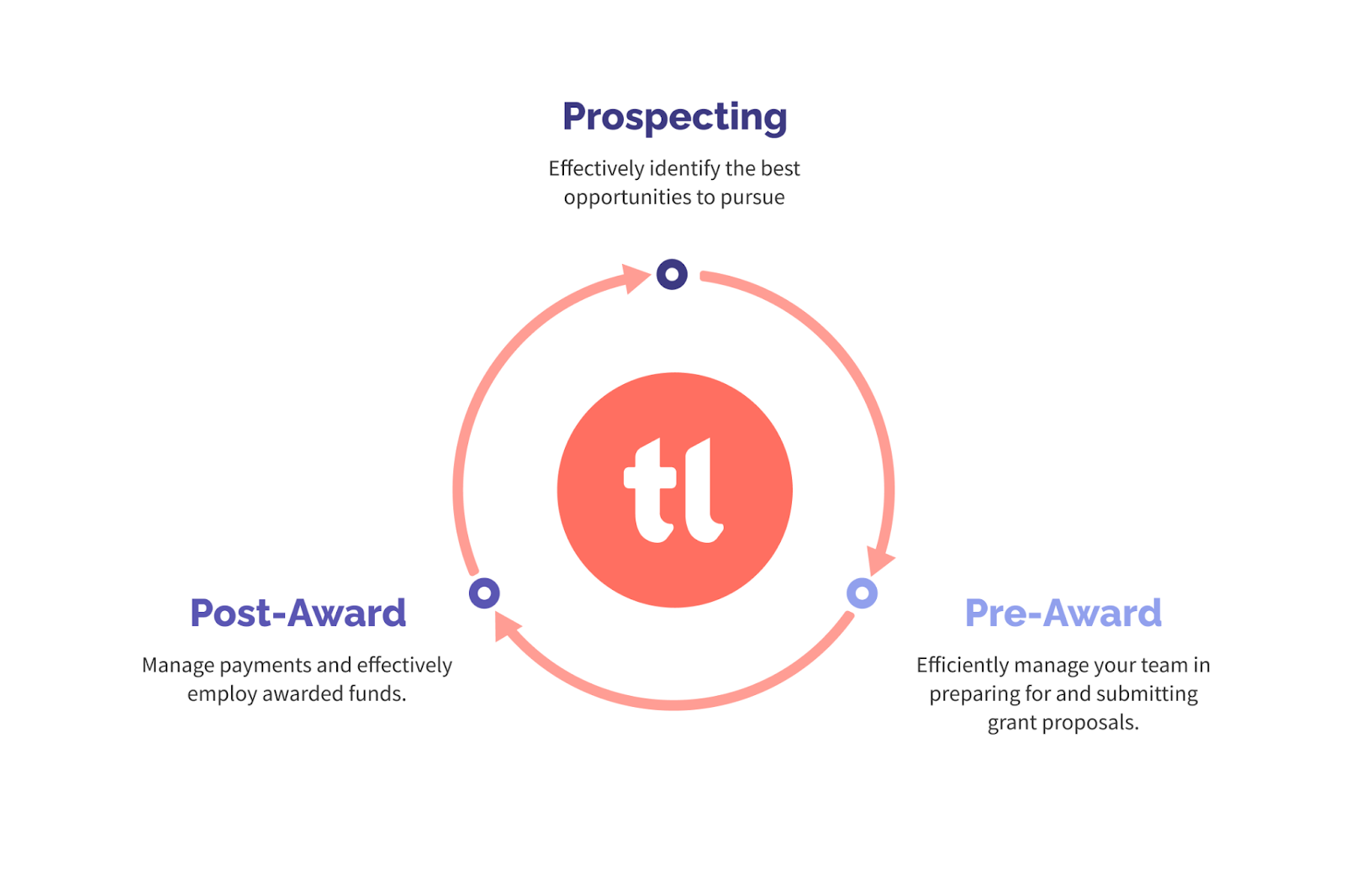
As the grant landscape becomes more complex and more competitive, nonprofits increasingly need tools that support the entire grant lifecycle, not just one piece of it. That means systems that bring prospecting, writing, and management together in one streamlined workflow.
Most grant management platforms focus on only one or two stages. Some tools help you search for opportunities but don’t support collaboration or tracking. Others handle post-award reporting but offer no support during discovery or proposal development. These gaps force nonprofits to stitch together multiple systems, often creating inefficiencies and increasing the risk of missed deadlines.
Instrumentl is the only platform that spans all three pillars of the grant lifecycle:
Here’s how other systems compare:

Instrumentl’s unified approach eliminates the need for jumping between multiple systems. Everything your team needs lives in one place, making Instrumentl the only true full lifecycle tool for grant-seeking nonprofits.
Grant teams that manage complex portfolios have seen the impact of having everything centralized in one place, as Dr. Jessica Knapp, CEO of Communities in Schools of Pennsylvania, shared:
“Instrumentl’s intuitive progress tracking features give us a high-level overview of all our grant activities, from initial research to post-award reporting. We can now track the status of each grant application and monitor our progress toward our fundraising goals in real time - all in one, centralized location.”
Choosing the right grant management software can feel overwhelming—especially when every platform promises to simplify your process, save time, or strengthen your results. To help nonprofits make informed decisions, we’ve compiled a detailed breakdown of the top tools used by grant professionals today.
Below you’ll find:
This section is designed to help you understand not only what each tool offers, but also how they differ so that you can choose the right one to best support your organization’s funding strategy.
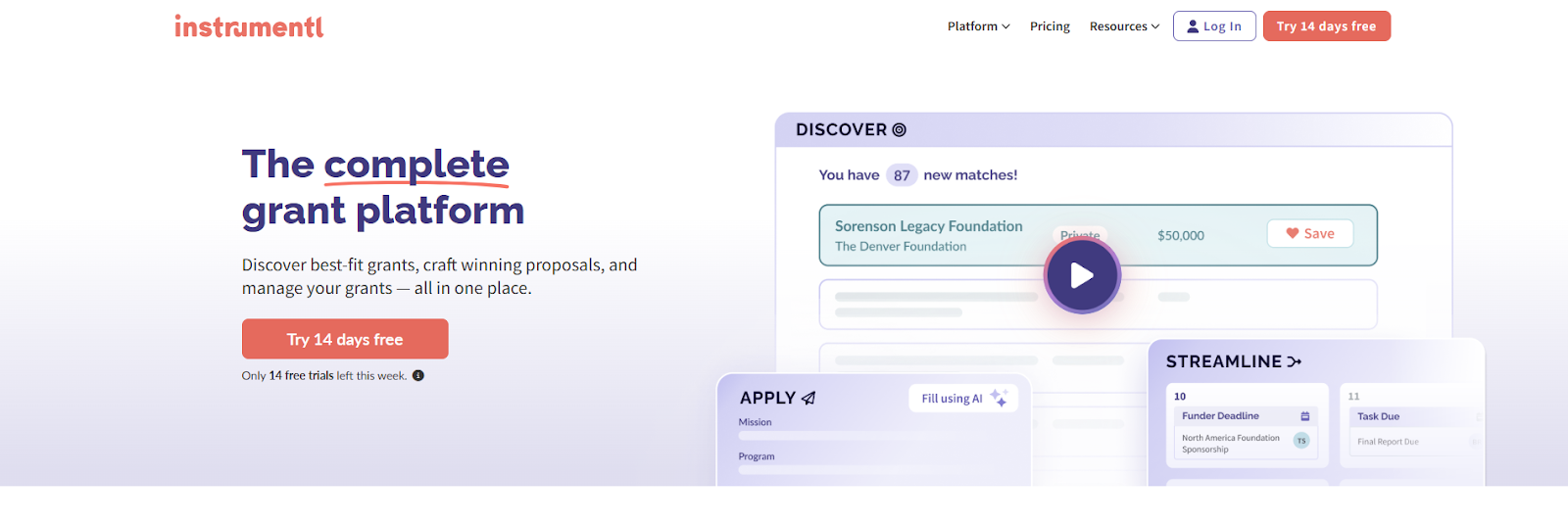
Overview: Instrumentl is the only true complete grant lifecycle tool. It combines prospecting, writing support, and grant administration/tracking in one platform, allowing teams to move from discovery to application to reporting without switching tools. With over 450,000 funder profiles and 27,000+ curated active grant opportunities, Instrumentl makes it easy for teams to win more funding with less stress.
Pricing: Instrumentl offers tiered subscription plans based on team size, number of users, and features (such as advanced reporting or integrations). A 14-day free trial is available so nonprofits can test core features before committing.
Best Features:
Reviews: Feedback on Instrumentl is consistently strong, with many users praising the platform for streamlining the processes they’d been managing across too many spreadsheets, emails, and calendar reminders.
One reviewer called Instrumentl a “game-changer for grant writers … the gold standard” for nonprofits that want to manage both prospecting and tracking more efficiently.”
Others highlight how much time they save once everything lives in one place. As one user shared, “Instrumentl saves us time on researching myriad potential grant funders and helps us stay very organized with our grants calendar, tracking awards, declines, etc.”
However, some note that the platform’s cost can feel like a barrier for smaller nonprofits or teams operating within tight budgets.

Overview: OpenGrants is a grant-seeking platform focused primarily on opportunity discovery and early-stage application support for nonprofits, startups, universities, and local governments. Its strengths include a grants database, AI-powered matching algorithms, and a marketplace of vetted grant experts for hire. The tool emphasizes helping organizations find relevant funding and accelerating the proposal process.
Pricing: OpenGrants offers a 14-day free trial. After the trial, a monthly subscription is around $29/month per user. This includes access to the database and AI matching.
Best Features
Reviews: Many nonprofit users say OpenGrants improves how they find and pursue new funding opportunities. Users describe the platform as accelerating the early stages of grant prospecting, uncovering opportunities that might otherwise be missed.
At the same time, users consistently point out that OpenGrants is strongest at discovery and lacks features to support full lifecycle management. Its tracking features lack the depth nonprofits need once they’re managing multiple active grants, coordinating internal tasks, or preparing for complex reporting cycles.

Overview: Euna Grants is a grant management platform designed to help organizations streamline both pre-award and post-award workflows. It offers modules for grant discovery, application management, compliance, reporting, and in some cases subrecipient tracking. The platform is frequently used by public-sector agencies, higher education institutions, and larger nonprofits that manage multiple grants with detailed requirements.
Pricing: Pricing for Euna Grants is customized based on the modules an organization needs and the number of users involved. No public pricing is available; organizations are encouraged to schedule a scoping conversation to determine costs.
Best Features:
Reviews: Because Euna Grants is designed for larger nonprofits, higher education institutions, and public agencies, many organizations that implement the platform value its structure and depth. The modular setup can be especially helpful for large teams managing complex awards.
Even with these strengths, the platform can feel more robust and complicated than what smaller nonprofits may need. Its onboarding and setup requirements may also feel heavy for teams with limited capacity. Another limitation is that the system doesn’t include any grant search or prospecting tools, meaning grant professionals will still need a separate solution to identify new funding opportunities.
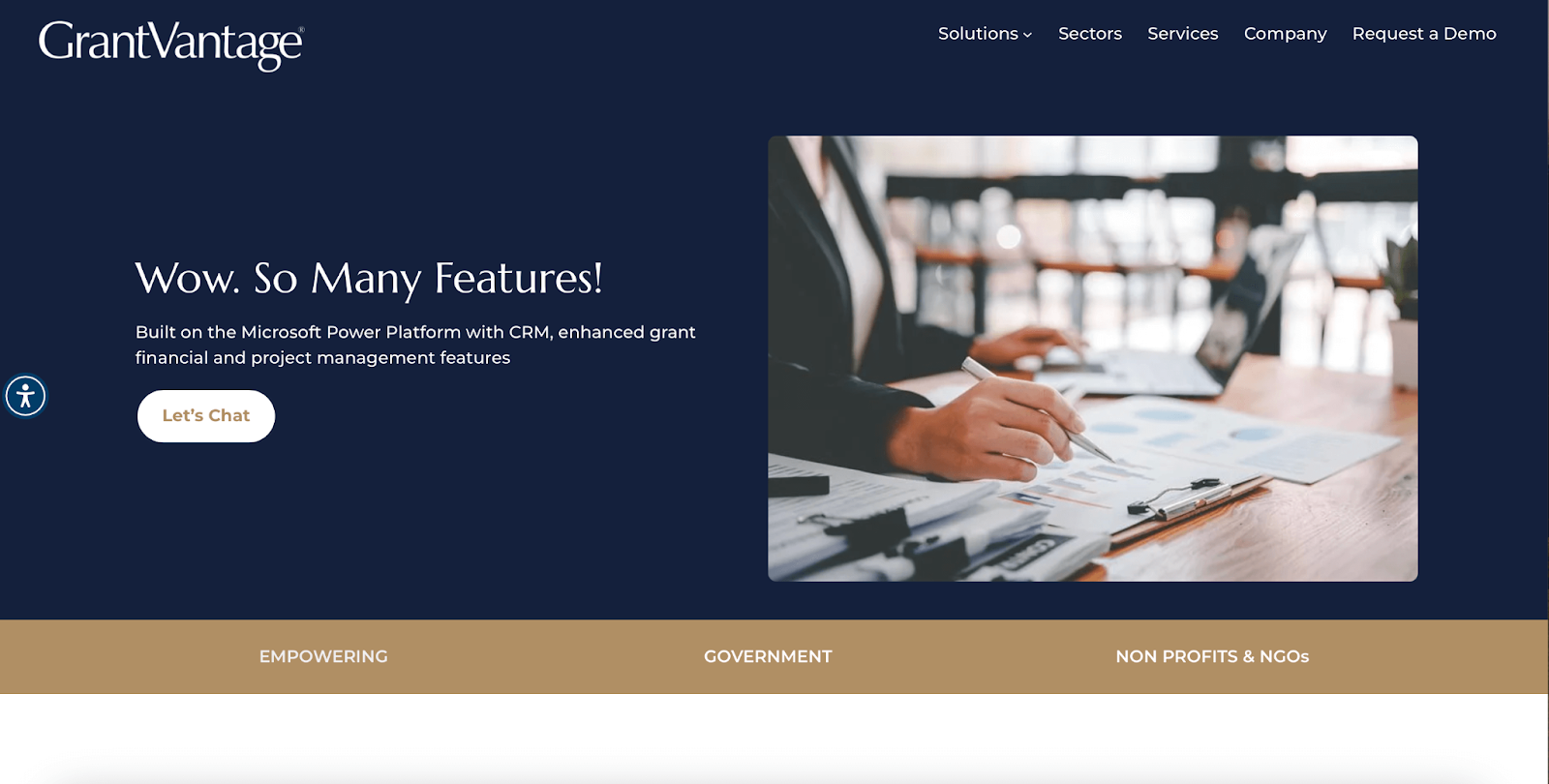
Overview: GrantVantage is a grant management platform designed to support the full lifecycle of nonprofit grant administration, particularly for organizations that need detailed oversight of deadlines, budgets, KPIs, and compliance. Built with post-award complexity in mind, the system offers tools for managing drawdowns, tracking performance measures, and maintaining documentation for audits and funders. GrantVantage also integrates with Microsoft Power Platform, making it a fit for organizations that want to connect grant workflows with existing data systems.
Pricing: GrantVantage does not publicly publish standard pricing. Costs vary depending on the organization, the modules selected, and whether integrations are required.
Best Features:
Reviews: Publicly available user reviews for GrantVantage are nearly nonexistent, but its feature set offers helpful insight into where the platform tends to fit best.
Organizations managing detailed post-award requirements probably value the system’s focus on budget, KPIs, and compliance—areas where many smaller tools fall short.
Still, GrantVantage is more specialized toward post-award and compliance workflows than early-stage prospecting or collaborative proposal development. Nonprofits searching for a single, unified grant management system that covers discovery, writing, and tracking—with collaboration features built in—will find they need to invest in tools to supplement what GrantVantage lacks.
.png)
Overview: GrantSeeker, built by the Fluxx team, is a grant tracking platform designed to help nonprofits organize deadlines, manage documents, and maintain visibility across the grant pipeline.
It serves as the applicant-side companion to Fluxx Grantmaker, which makes it especially useful for organizations that frequently apply through Fluxx portals.
The tool includes calendars, basic prospecting features, and a clean dashboard for managing active and upcoming opportunities.
Pricing: GrantSeeker currently offers three main options:
Each plan offers a 14-day free trial so teams can test the platform out before committing.
Best Features:
Reviews: Nonprofits that use GrantSeeker often describe it as a major improvement over managing grants in spreadsheets or shared documents. One user shared this review on Capterra:
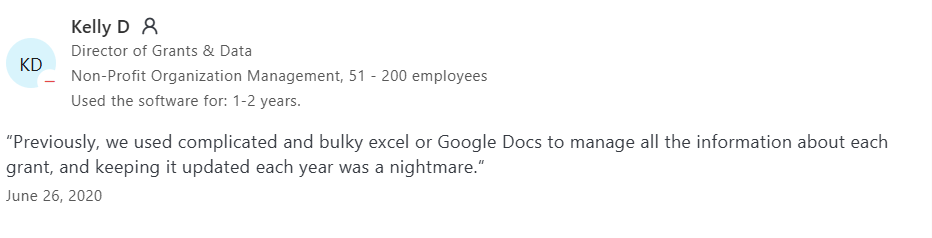
GrantSeeker’s clean interface and visual calendars tend to stand out for teams looking for a simpler, more intuitive way to track deadlines and manage their grant pipeline.
It’s important to note, however, that some users find the platform’s prospecting tools limited compared to those of more comprehensive research platforms.
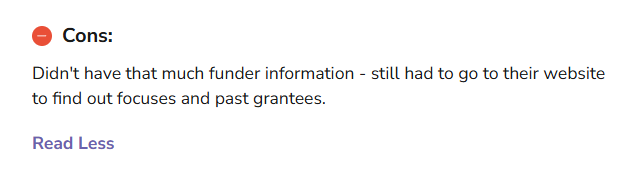
For nonprofits that prioritize deep funder profiles, historical giving data, and advanced search capabilities, GrantSeeker will likely need to be supplemented with additional tools.
Overview: GrantWatch is a grant database platform that provides nonprofits, small businesses, and individuals access to a frequently updated listing of grant opportunities from foundations, corporations, governments, and other funders. The platform is built for those primarily seeking to discover potential grants rather than manage the full lifecycle.
Pricing: GrantWatch operates on a subscription model with several tiers. Current pricing includes:
These plans offer full access to the platform’s searchable grant database.
Best Features:
Reviews: Unlike many grant software tools with extensive feedback on platforms like G2, Capterra, or TrustRadius, Grantwatch has very little third-party commentary available. Most endorsements appear directly on their website, which makes it hard for nonprofits to fully understand how the platform performs.
Overview: Impala Digital is a data-forward platform designed to help nonprofits deepen their prospecting strategy through funder intelligence and philanthropic ecosystem insights. Instead of acting as a traditional grant database or grant management system, Impala focuses on giving users a comprehensive view of funders’ giving histories, priorities, networks, and patterns. This makes it especially valuable for organizations that want to be more strategic about who they approach rather than relying on broad, volume-based grant searches.
Pricing: Impala offers three primary tiers:
Best Features:
Reviews: Public, third-party reviews for Impala Digital are still emerging, but the themes that do surface tend to reflect the platform’s specialized role in the grant-seeking process.
Nonprofits that use Impala often highlight its ability to illuminate the funding landscape, particularly when exploring new program areas, entering new geographic regions, or trying to understand how peer organizations are funded.
Because Impala focuses specifically on research and strategic insights, users generally view it as a complement to other tools rather than a standalone solution. It doesn’t include features such as application tracking, deadline reminders, collaboration features, or post-award management. Organizations that want a single, end-to-end grant management system often pair Impala with another platform built for workflow and tracking.
Overview: AmpliFund is a comprehensive grant management platform designed for organizations managing complex or high-volume grant portfolios. Serving nonprofits, government agencies, higher education institutions, and healthcare systems, the platform supports opportunity tracking and application workflows to award management, compliance, budgeting, and reporting. Its depth makes it especially useful for teams that need rigorous oversight, detailed financial tracking, or subrecipient management.
Pricing: Like many other platforms we’ve reviewed, AmpliFund does not publish detailed pricing information on its website. Prospective customers are encouraged to contact AmpliFund to request a demo and discuss pricing.
Best Features:
Reviews: AmpliFund is often selected by organizations that need structure—particularly teams managing large, compliance-heavy grant portfolios. Public reviews indicate that the platform’s depth is a major draw for institutions that require detailed financial tracking, audit-ready documentation, or subrecipient oversight.
However, user feedback also highlights some challenges with the platform. Reviewers consistently note that the system feels difficult to learn, navigate, and configure.
A review on the site Software Advice shares:

Additionally, this user on Capterra shared feedback on the search function:
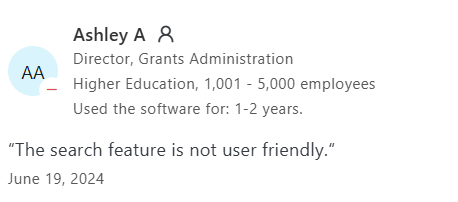
Across multiple sources, the overall theme is clear: AmpliFund offers powerful capabilities for organizations that need rigorous compliance and financial management, but the user experience and learning curve may be demanding for smaller teams or nonprofits seeking an intuitive, easy-to-adopt system.
Choosing the best grant management software for your nonprofit starts with understanding what your team needs to streamline your workflow, reduce administrative burden, and create a more strategic, coordinated approach to grants across your organization.
We’re going to walk you through some core criteria that you should consider when comparing different platforms.
What to Look For
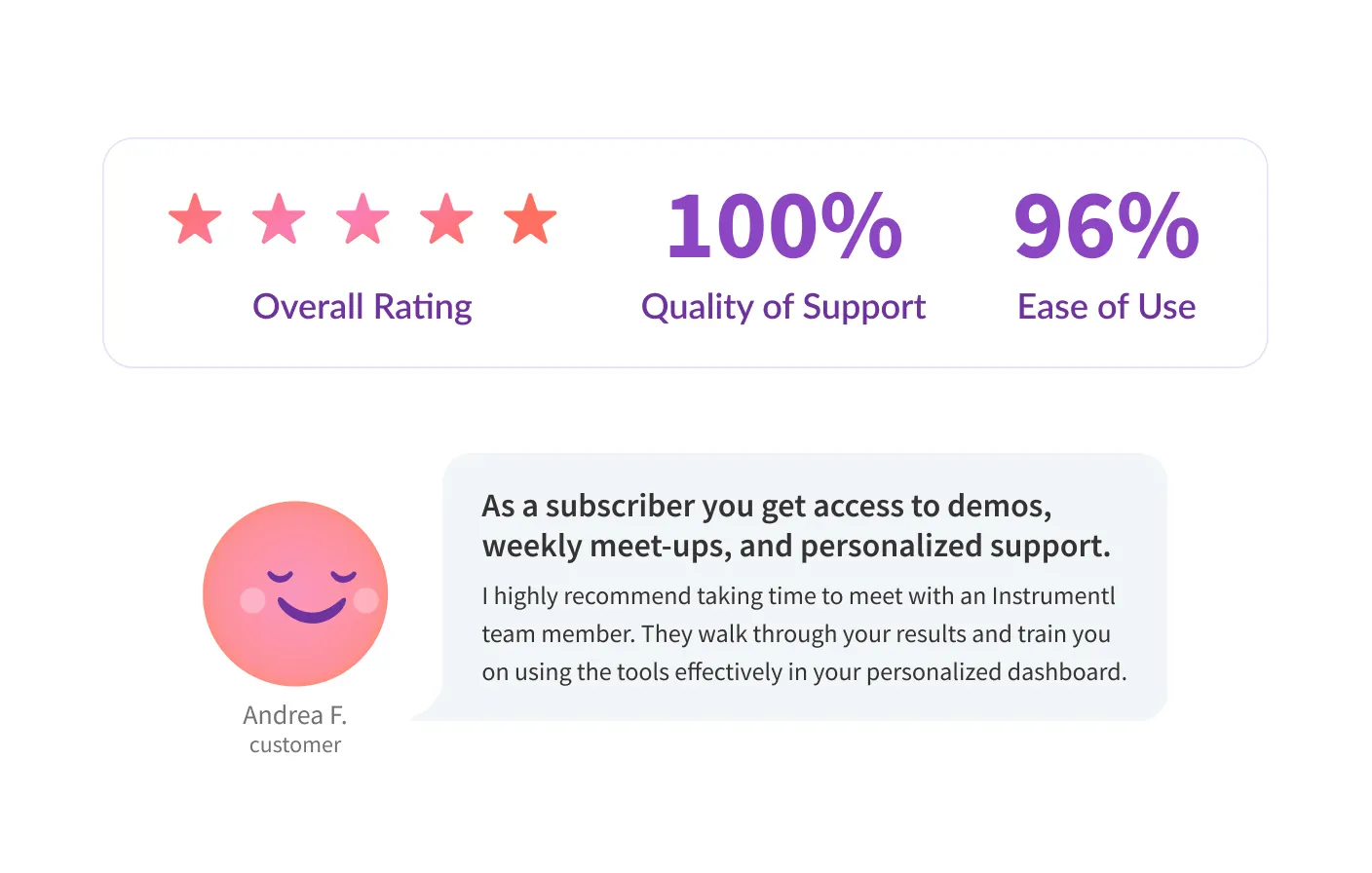
Nonprofits, especially those with small development teams, need a platform that is intuitive from day one. If your team has to climb a steep learning curve just to track deadlines or upload documents, the tool will slow you down instead of helping speed you up.
How Instrumentl Supports This
Instrumentl is built specifically for grant-seeking nonprofits, which means its interface, workflows, and onboarding are designed for real-world development teams—not enterprise IT departments.
What to Look For
Grant management systems should support the way nonprofits actually work, including:
How Instrumentl Supports This
Instrumentl’s grant tracker automatically organizes opportunities by fiscal year, renewal cycle, reporting deadlines, and key funder requirements. This helps nonprofits stay ahead of deliverables and maintain long-term funder relationships all within one centralized workspace.

What to Look For
Many tools on the market focus on either prospecting or tracking—but rarely both. Nonprofits end up stitching together multiple systems, spreadsheets, or databases to maintain a complete workflow.
How Instrumentl Supports This
Instrumentl combines prospecting, tracking, and reporting in one place. With smart matching, funder insights, 990 data, deadline tracking, and saved materials all under one roof, teams can move opportunities from discovery to submission to reporting without switching platforms.
What to Look For
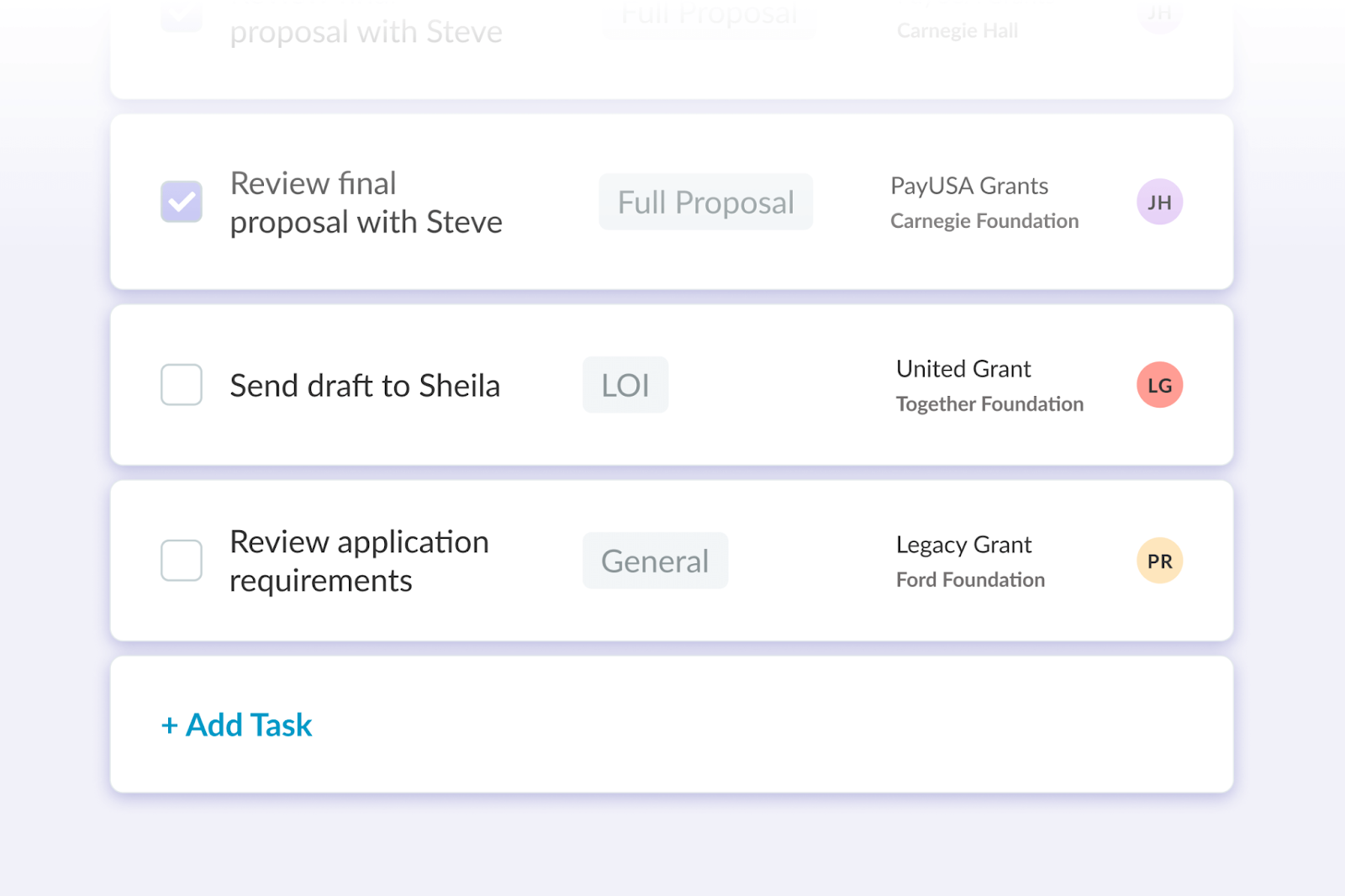
As grant portfolios grow, teams need shared visibility into who is doing what. Strong collaboration features help teams coordinate writing, attach documents, update statuses and keep everyone on the same timeline.
How Instrumentl Supports This
Instrumentl includes built-in task assignment, shared workspaces, saved documents, and comment threads, making it easy for multiple team members to stay aligned. Staff can collaborate in real time without version confusion or unnecessary back-and-forth emails.
What to Look For
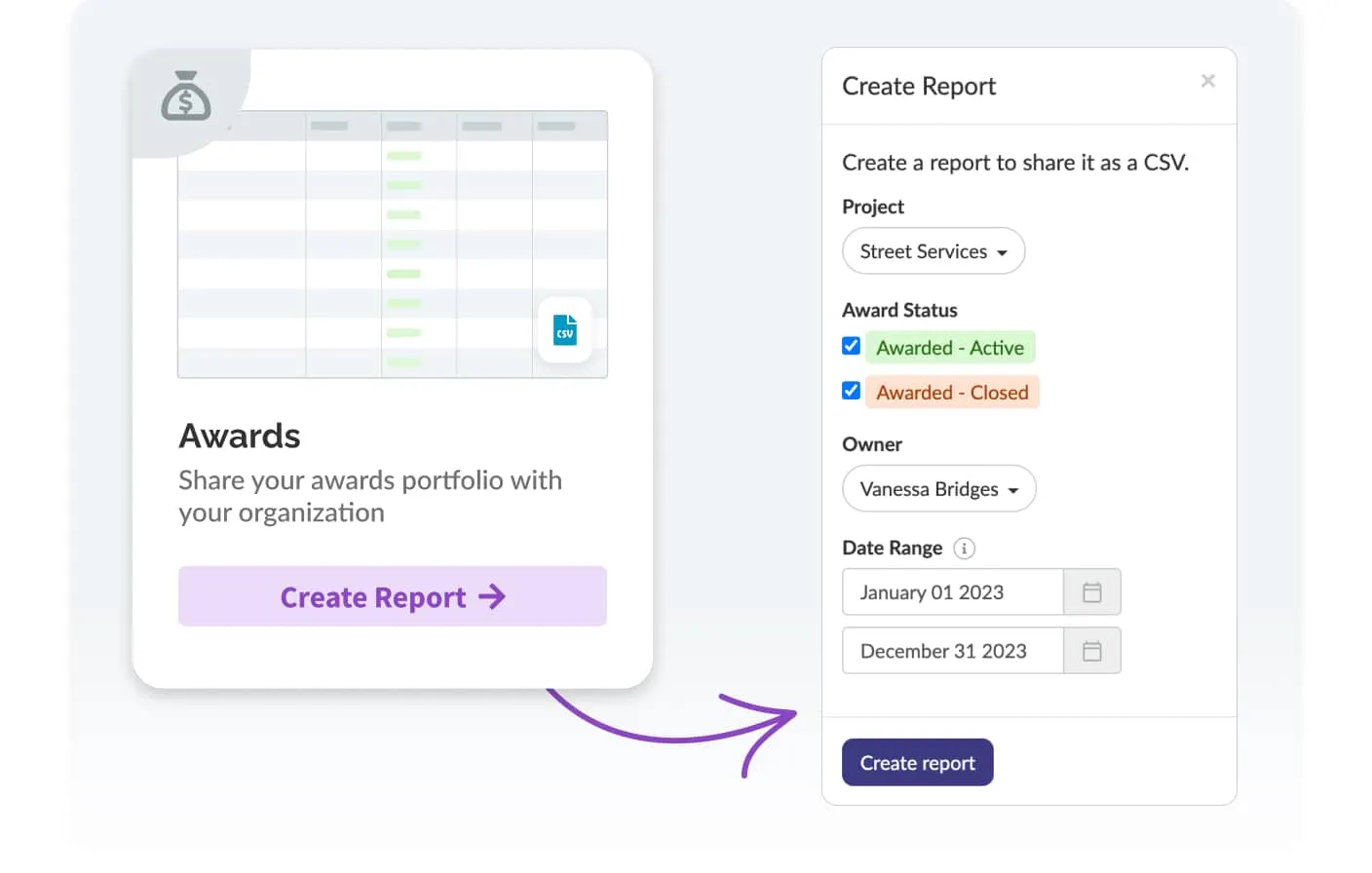
Boards, program teams, and funders increasingly want data-driven updates on grant performance. Grant tracking software for nonprofits should allow teams to quickly pull:
How Instrumentl Supports This
Instrumentl’s reporting dashboard allows users to instantly generate custom reports for leadership, board updates, and funder meetings. With built-in charts, filters, and export options, teams spend less time compiling data and more time acting on it.
What to Look For
Pricing for grant management software varies widely. Nonprofits should look for clear pricing, flexible tiers, and the ability to scale as the organization grows without unexpected add-ons or hidden fees.
How Instrumentl Supports This
Instrumentl offers transparent pricing with tiers that expand as organizations grow so teams aren’t locked into a system that stops fitting their needs. As for nonprofits exploring tools or migrating off spreadsheets, Instrumentl provides a 14-day free trial with no credit card required and no strings attached. This means you and your team can give the platform a try and see how it fits your workflow risk-free.
Many platforms in this space handle only one piece of the grants process:
Instrumentl brings these elements together, creating a unified workflow that reduces administrative burden, eliminates duplicated work, and keeps teams aligned across the entire lifecycle.
For nonprofits looking for the best grant management software for nonprofits, choosing an all-in-one platform like Instrumentl can save time, consolidate systems, and ensure that opportunities don’t fall through the cracks.
What does the grant management process include?
The grant management process spans the full lifecycle of a grant, from identifying opportunities and evaluating fit, to preparing and submitting applications, tracking awards, managing compliance requirements, and completing post-award reporting.
A strong system helps nonprofits stay organized, meet deadlines, collaborate effectively, and maintain long-term relationships with funders.
What is the grant management cycle?
The grant management cycle typically includes five core stages:
What is the role of a grant manager?
A grant manager oversees an organization’s grant portfolio, ensuring applications are competitive, deadlines are met, and awarded funds are managed effectively.
Their responsibilities often include prospect research, proposal coordination, budget tracking, compliance oversight, funder communication, and preparing internal or external reports. A dedicated grant management system helps grant managers work more efficiently and reduces administrative burden.
Do funders and grant seekers use the same grant management systems?
Not usually. While the terms sound similar, grant-seeking software (like Instrumentl) is built for nonprofits looking for funding, whereas grantmaking software is designed for foundations, governments, and corporations that award grants.
Grantmakers need systems to manage application intake, reviewer workflows, payments, and compliance processes.
Common grantmaker-focused platforms include:
These tools are often confused with nonprofit-facing software because both groups use the term “grant management”, but their functions differ significantly. Nonprofits seeking funding need platforms that prioritize prospecting, application tracking, collaboration, and reporting—not application intake or reviewer workflows.
Table of contents

