In this blog post, explore 7 proven strategies to raise money for your nonprofit in 2023, including membership programs, silent auctions, corporate sponsorships and more.

TOPIC
AUDIENCE
As an experienced nonprofit professional, I know how challenging fundraising can be.
In a previous role I was tasked with raising $100,000 to expand an innovative housing program serving individuals with justice system involvement. So what did I do? I decided to pursue grants.
While grants are oftentimes the best choice for revenue growth, fundraising professionals know that implementing a diverse fundraising approach is the most effective way to sustain operations, enhance services, and initiate growth over an extended period of time.
In this article we will walk you through a variety of advanced fundraising methods that are sure to help refine your organization’s fundraising strategy.
Let’s dive in!
There are a wide variety of nonprofit fundraising approaches that exist, even outside of grant programs. These different strategies include:
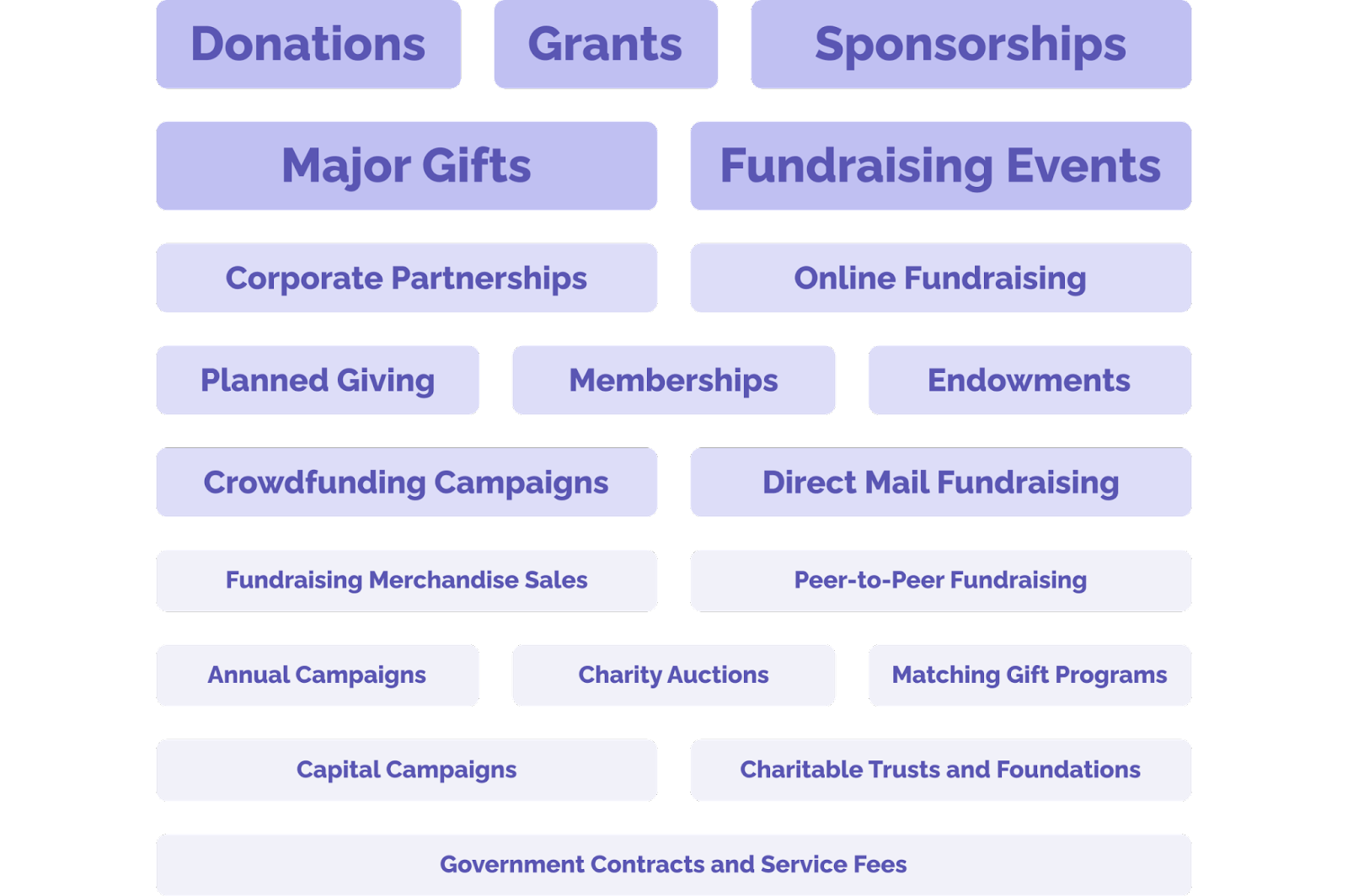
As an experienced fundraiser yourself, you are most likely very familiar with these strategies. However, each requires a thoughtful, carefully-considered approach to make them worthwhile.
In the following sections, we’ll cover a variety of advanced methods and tips backed by experts so that you can implement these techniques for the greatest impact and success.
Grants are one of the most effective and reliable sources of funding—especially for nonprofits who want to sustain their operations and programming over the long term.

Grants are a powerful fundraising mechanism for several reasons, including:
While grants can be a strong and reliable source of funding for your nonprofit, the challenge is finding best-fit opportunities that are sure to result in strong ROIs for your organization. But this is where Instrumentl comes in!
Instrumentl is a tool that can help nonprofits find hundreds of well-aligned opportunities and grow their revenue exponentially.
Linda Rucker of the Houston-based nonprofit Cy-Hope, shared how using Instrumentl and connecting to new and better grant opportunities grew her nonprofit’s grant portfolio exponentially:
“Winning 30% more grants thanks to Instrumentl was a huge morale boost. Seeing how many funding opportunities are out there gave our Executive Director and our development team the confidence to hire me as a full-time grant writer.”

Here are two great resources that can help you learn more about building an effective grants strategy:
With countless communication models available to nonprofits free of cost, it can be challenging to decide where engagement will be highest.
An intentional approach to audience engagement is essential—not every group will be effectively reached by the same type of communication. Here are two examples of how you can tailor your approach to engage a wide audience of potential donors:
Make sure to evaluate key funder demographics and their preferred communication style. For example, if a nonprofit’s majority of donor base is older or it has a significant number of corporate and business supporters, a strong monthly or weekly newsletter via email or snail mail may be the best strategy.

Not surprisingly, younger audiences are most effectively engaged through social media. Notably, TikTok and Instagram are most popular among Gen Z and can leverage a combination of narrative and images to communicate with users.

Social media also allows for two way communication between users and the nonprofit entity. This gives followers an opportunity to be part of a dialogue with the organization and become active participants in the organization’s mission and work.
For guidance, study the strategies and posts from other nonprofits’ social media channels. Planned Parenthood has a strong Instagram presence weaving in messages for targeted advocacy, urgent responses to critical legislative decisions, and news about the organizations that are of interest to users.

3. Host Impactful Fundraising Events
Events are a central component to any nonprofit’s yearly operations and vital to a sound fundraising strategy.

Silent auctions, pledges, and ticket sales are all tried and true methods for integrating fundraising into your nonprofit’s events. However, fundraising isn’t the only benefit of these events:
Studies reveal that special events can benefit a nonprofit organization in more ways than by increasing funds. Events help increase brand recognition for nonprofits as well as broadly advocate for awareness in the organization’s mission.
Starting and managing an effective nonprofit fundraising event can be challenging—but it doesn’t have to be. This how-to guide on How To Start a Successful Nonprofit Fundraising Event in 7 Steps will give you the foundational knowledge and resources you need to develop a truly impactful fundraising event.
4. Win Corporate Sponsorships and Partnerships
A nonprofit is only as strong as the relationships it cultivates—and that includes partnerships with businesses and corporations.

Instrumental’s expert-run webinar, 4 Tips for Building Relationships With Charitable Corporations with Jenni Hargrove, guides nonprofit professionals through establishing these partnerships. Jenni’s tips include:
While this may seem obvious, intentionality around this tip will result in the best results for your nonprofit. Finding corporations most likely to fund your mission means looking for alignment in:
If possible, leveraging an existing connection you have to get an introduction to a decision maker at the corporation can help make inroads with their team and get you closer to securing a sponsorship.
When it comes to effectively establishing a relationship with a corporation, courage is key! Don’t be shy about asking for support. Almost all businesses have a type of “give back” program and are eager to support nonprofits that align with their mission and objectives.
Relationship building does not end once the sponsorship has been secured. Once the connection has been made, make an intentional point of following up with the corporation and shepherding the relationship forward. You want to be sure this is a relationship that will continue well into the future!
For further guidance on building out an effective corporate sponsorship program, you can review our guide: Understanding Sponsorship Levels for Nonprofits.
5. Build and Nurture Major Donor Relationships
Major donors are vital relationships that nonprofits must build and maintain for ensured growth and sustainability. While not as predictable as grants, major donors are another avenue for securing large amounts of money.

While major donors may make up a small percentage of the number of donors who give to an organization, the overall amount they give makes up a significant amount of fundraising revenue. Best industry practice and trends indicate that approximately 80% of donation revenue earned by nonprofits typically comes from a fraction of the overall donor base—about 20%.
There are four primary steps in the major donor process:
Learn more from our essential guide to major donor fundraising: 8 Major Donor Fundraising Strategies to Implement in 2023.
6. Support Nonprofit Staff and Join Philanthropic or Nonprofit Community Networks
Investing in talented, well-resourced staff and building strength internally may not sound like a fundraising strategy, but it absolutely is—and here’s why:

Nonprofits that have few resources, low retention rates, and weak organizational culture will inevitably struggle to grow their revenue and develop effective fundraising strategies.
According to a report from the Council of Nonprofits, 50% of nonprofit professionals reported stress and burnout as a key reason for workforce shortages.

A surefire way to avoid burnout and give your staff the tools they need to succeed is to invest in professional development opportunities.
There are several professional networks that provide in-depth training, certification, and training to nonprofit professionals across a spectrum of subject matters and skill sets.
Some notable examples are:

7. Expanding Revenue Streams
Fundraising strategies don’t end with the approaches listed above! Once you have established strong sources of revenue through the strategies we’ve reviewed, you should be ready to expand your revenue streams even further.
Two such approaches for expansion are implementing a donor membership program and initiating a capital campaign.
Donor membership programs are a great way to bring in consistent, reliable streams of revenue to your organization.

Donor membership programs are so lucrative for nonprofits because they are recurring. Unlike one-time donations from supporters, memberships draw in loyal audiences through exclusive benefits, increasing the likelihood that they will continue to support your nonprofit month-to-month, or year-to-year.
There are countless ways to implement an effective membership program, depending on the type of nonprofit organization you manage and the work you are engaged in. This guide to giving societies is a great place to start.
Capital campaigns are essential for bringing in large sums of diversified revenue geared at supporting a specific program, capital improvement, or expansion. They are an effective tool for galvanizing a strong base of support for your mission and engaging new major donors around a specific project.

According to a report from Capital Campaign Pro, an innovative nonprofit consulting firm that focuses on capital campaign management, capital campaigns result in overwhelming success for nonprofits—94% of surveyed nonprofits reporting positive results raising over 100% of their stated goal on average.

Techniques that will help ensure your campaign will achieve success include:
Remember, capital campaigns are intensive, long-term projects. You can help make sure your organization is ready to start one by reviewing some of Instrumentl’s key resources. Start with Capital Campaign Planning for a Nonprofit to learn more!
Where Will You Start With Your Fundraising?
We’d argue that you start with grant seeking as a solid foundation. In doing so, you’ll build out strong, effective development programs that will lead to increased revenue and sustainability.
To learn more about how to get started finding grants, follow our extensive guide to finding best-fit grants for your causes. Read our guide to grant prospect research.
Instrumentl has what you need to achieve remarkable success in your grants strategy. Try it out with a 14 day free trial today!
Table of contents

