

June 17, 2026
The Impact Issue #115: A Relevant Grant Isn't Always The Right Grant
A four-question framework for ruthless grant prioritization.
Hi! Welcome to The Impact.
In 2026, the cost of chasing the wrong grants has never been higher.
With new restrictions on federal funds, private funders going "invite only," and AI shifting how grants are found and won, grant professionals are being asked to "do more with less" at the exact moment when the funding landscape feels least predictable.
So how do you know which grants are worth your time?
This week we're sharing the F.A.I.R. framework: a grant qualification methodology grantseekers can use to ruthlessly prioritize whether a grant is actually worth your time.
Pull up your pipeline and let's get into it.
Don’t Miss Out!
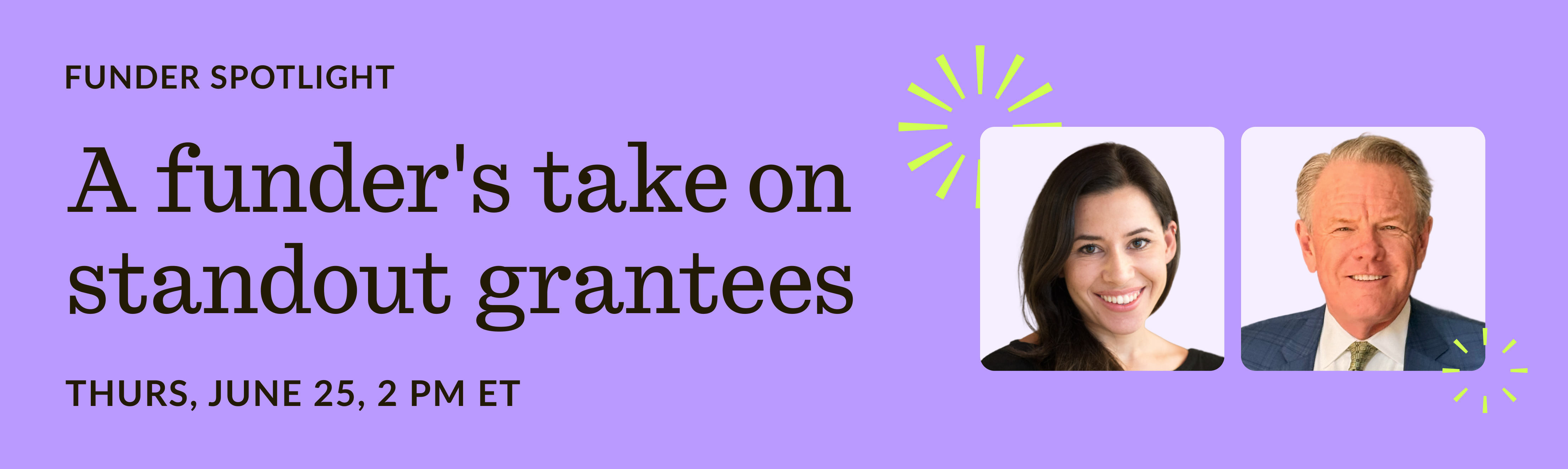
The funding landscape is shifting, and for nonprofits the margin of error keeps shrinking. Competition is steeper, compliance demands are higher, and every application has to count.
So what are funders actually thinking when they read yours?
On June 25, get a rare look inside the foundation's perspective from two people who live it every day. Greg Price, President of the Gamble Foundation, sets grantmaking strategy alongside the board. Melissa Morazán of Pacific Foundation Services, a Foundation Source company, carries that vision into the foundation's day-to-day grantmaking and grantee relationships.
You'll walk away with:
- An inside look at one family foundation's approach to grantmaking in an uncertain funding landscape
- Three concrete strategies to stand out with family funders during the application process
- A framework for raising capacity-building conversations with your existing funders, in a way that feels natural
We're closing out with a live Q&A, so bring the burning questions you've always wanted to ask a funder.
Pitfalls and Pointers
⚠️ Pitfall: Volume Is Not a Funding Strategy
You already know your capacity is maxed. So does everyone on your team.
And yet, the pressure to backfill lost funding or diversify away from federal dollars has most grant pros saying yes to grants they know, deep down, aren't quite right.
Here's what that actually costs:
- Every low-fit application is a bet you're making with someone else's time — your program staff's, your ED's, your own.
- The grant you didn't write because you were busy writing the wrong one? That's the real loss.
- And the burnout that comes from grinding through applications that were never going to land? That's the part nobody talks about.
More applications won't fix a funding gap. Pursuing the right ones will.
💡 Pointer: Use the FAIR Framework to Ruthlessly Prioritize Your Grant Pipeline
Every grant that lands in your inbox isn't worth your team's time. Here's how to know which ones are.
Given the current grant landscape, is pursuing this grant a FAIR use of your time, effort, and energy?
F — Fit: Does this funder's giving priorities reflect our work?
Eligibility requirements tell you if you can apply, but their past giving trends will tell you if you should. A funder's 990, annual report, or past grantee list can often tell you more about whether your org belongs in their portfolio than their listed guidelines ever will.
Ask yourself: Has this funder funded 3+ organizations in our region in the last two years? Have they supported organizations with a similar mission in the last two years?
A — Achievability: Can we realistically apply for, win, and execute this grant right now?
Once you’ve confirmed a funder is mission-aligned, you need to ask a harder question: do you actually have a shot?
A well-aligned funder who gives to the same twenty organizations every cycle isn't a slam dunk opportunity, it's a time sink. Know the difference between an open door and a closed one before your team spends a single hour on the proposal.
Ask yourself: Do at least 25% of their awards go to new grantees?
I — Investment: Is the return worth the effort, compared to everything else we could be pursuing right now?
This is your quick gut check before you go all in. Take in the full picture: what it takes to apply, what it takes to manage, and what other grants you might be giving up that are a stronger fit.
A $5,000 grant with a 20-page application, quarterly narrative reports, and a detailed budget reconciliation is a very different proposition than a $50,000 grant with a two-page LOI and an annual report.
Ask yourself: Is the award size worth the application effort and reporting requirements? Are there higher-probability opportunities that deserve our energy first?
R — Relationship: What does our history with this funder tell us about our chances?
Before you invest time in any opportunity, know your starting point. A board connection, a past grantee who can make an introduction, a previous application that got close — these things change the odds.
The intel you gather before you apply is often worth more than anything you write in the proposal itself.
Ask yourself: Do we have any existing connections that could give us a warm introduction?
Tech You Should Know
The FAIR framework helps you quickly evaluate which grants are worth your time. But how are you finding good-fit, active grants to begin with?
What:
Meet the new Instrumentl Discover, your intelligent prospecting partner.
Instrumentl Discover turns grant prospecting into a conversation. Describe your program, refine your match results based on your organization's unique priorities, and trust that new opportunities will find you — built on 34,000+ active, human-validated opportunities, updated daily.
How Grant Writers Can Use It:
- Describe your program in plain language and get matched to opportunities based on meaning, not just keywords.
- See the "why" behind every match with geographic focus and eligibility nuance at a glance.
- Bring the best fits into focus with completely customizable filters to get a curated list of opportunities that are specific to your organization’s goals (e.g. tell the prospecting assistant:: “I don't want to see any grants that require a match”).
🚀 Try the new Instrumentl Discover for free with a 14-day trial!
Expert Perspectives
🏆 Angela Braren on Why a Relevant Grant Isn't Always the Right Grant
Grant prospecting has always been about more than finding opportunities — it's about knowing which ones are actually worth your time. Instrumentl Co-founder Angela Braren, who leads Engineering, Product, and Design, put it plainly:
"A 'relevant' grant isn't always the 'right' grant. You still have to layer in your organization's specific priorities, the preferences you've developed from past wins — all that criteria that's specific to your unique funding strategy."
This is exactly what the FAIR framework is designed to help you do. Before you invest time in any opportunity, run it through the four questions — Fit, Achievability, Investment, Relationship — to make sure the grant in front of you isn't just relevant, but actually right for your organization’s current priorities.
Ready to Stop Guessing?
….and start making smarter, more strategic funding decisions? With Instrumentl, you’ll get access to real-time funding opportunities, expert insights, and the tools you need to build a more sustainable grant strategy.
Sign up to get The Impact newsletter delivered to your inbox every week. Subscribe now!
100% Free Grant Writing Resources Straight to Your Inbox
