Find a list of the best grant websites for nonprofits who want to find and win grant funding. We'll show you what the best features are, how to evaluate them, and which ones to use based on your particular use case.

TOPIC
AUDIENCE
Searching for grant opportunities but not sure where to start? You’re not alone!
There are dozens of grant websites that list funding opportunities for nonprofits in the United States. But they’re not interchangeable. Some are strong research tools. Others focus narrowly on federal RFPs. And a small number are built to support your entire grants process - from prospecting to tracking to reporting.
The right choice depends on what kind of grant work you’re doing - and how you manage it.
To make this easier, we’ve broken down the best grant websites and evaluated each one based on pricing, popularity, core features, types and volume of grants listed, and overall ease of use.
Quick Summary
Let’s take a closer look at how each one stacks up.
If you’ve ever tried more than one grant database, you’ve probably noticed something pretty quickly: they don’t all solve the same problem.
Some are great for pulling up a list of open opportunities. Others can help you dig into a foundation’s giving history. And a few are built to support the entire grants process - from identifying prospects to tracking deadlines and managing awarded funds.
So, how do you decide which one is right for you?
It comes down to a handful of practical considerations. As we walk through each platform below, we’ll evaluate them using the same lens:
The “best” grant website isn’t universal - it’s the one that fits your unique workflow, your team’s capacity, and your overall year-round grant strategy.
Below is a side-by-side comparison of the most widely used grant websites. We’ve evaluated each one using the same criteria: pricing, types and volume of grants, features, and real-world usability.
Best For: Instrumentl is best for nonprofits that want to build and manage a full-cycle, year-round grant pipeline - from prospecting to post-award tracking.
We’ll say it plainly: if grants are a meaningful part of your revenue strategy, Instrumentl is the most comprehensive option on this list.
Instrumentl is built for organizations that don’t just want to find grants - they want to build a sustainable, revenue-driving grant strategy.
Most grant websites stop at discovery; Instrumentl supports what happens next. Instead of bouncing between search tools, spreadsheets, shared drives, and multiple calendars, Instrumentl brings the entire process into one place - from identifying strong prospects to managing awarded funds.
Types & Volume of Grants
Instrumentl maintains one of the most comprehensive grant databases available, with 30,000+ active grant opportunities and 400,000+ funders across sectors.
The database includes:
This breadth allows you to diversify funding streams while keeping everything centralized in a single system.
Core Features
Many grant databases help you identify opportunities. Instrumentl goes several steps further by helping you evaluate fit, stay organized, and manage your grant pipeline over time.
Here are a few of the features that really make it stand out:
Built-in funder intelligence - Access 990-based insights that go beyond surface-level grant listings. Instrumentl shows you where a foundation has funded in the past, how much they typically award, and whether they support organizations similar to yours - so you can evaluate competitiveness before investing in a full proposal.
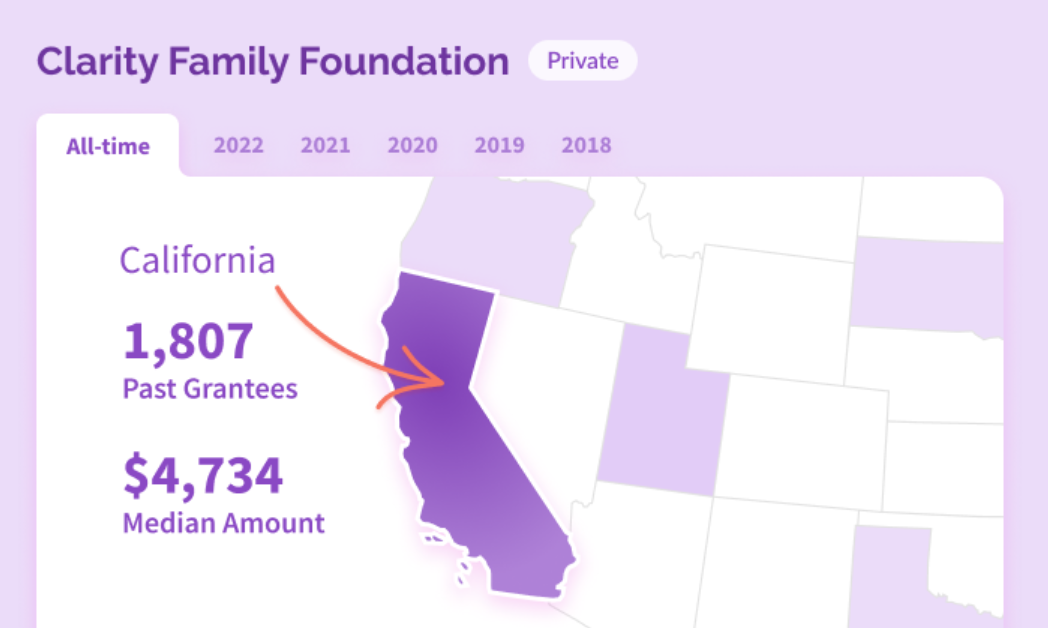
The Past Grantees map shows where a funder has historically distributed awards. If 1,800+ grants have been awarded in California with a median grant size of $4,734, you can immediately understand both geographic focus and funding scale - helping you determine alignment in seconds.
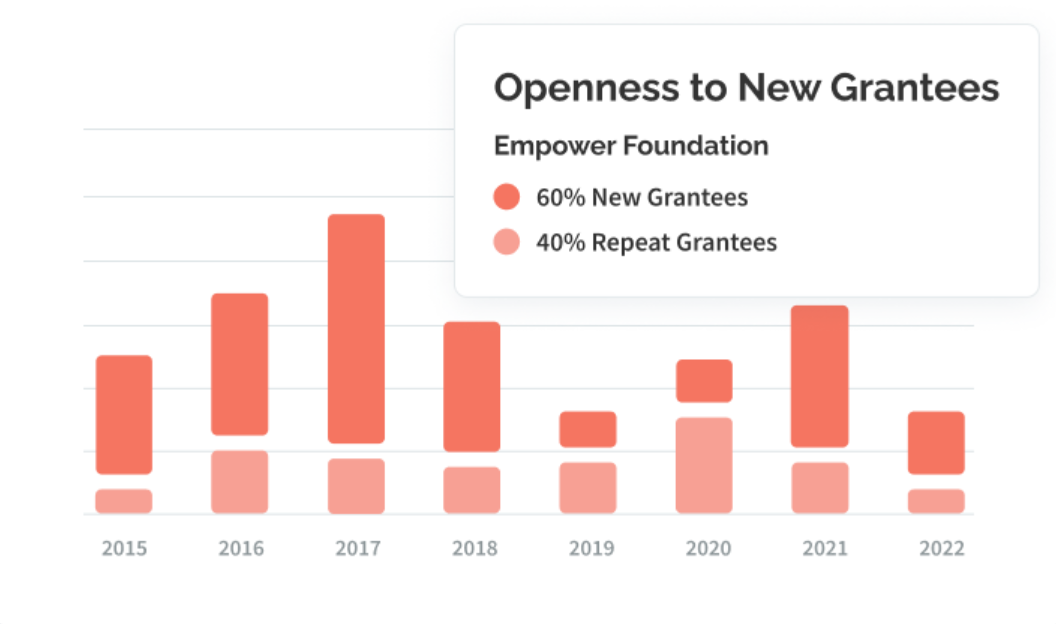
The Openness to New Grantees chart reveals how often a foundation funds first-time applicants versus repeat grantees. This helps you assess whether you’re approaching a relationship-driven funder or one that regularly welcomes new partners.
Intelligent matching - Instrumentl doesn’t require you to start from scratch every time you search for funding. Instead, you set up a project once - defining your mission, geography, funding needs, and program focus - and Instrumentl continuously scans for good-fit matches on your behalf.
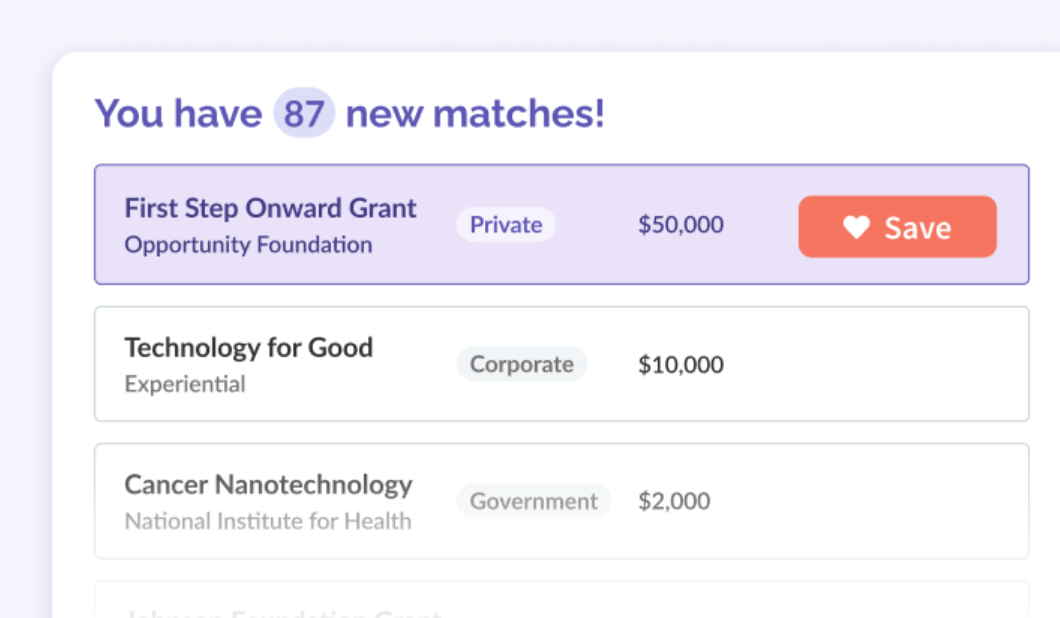
When you see a “new matches” alert, that means newly curated grant opportunities have been identified based on your saved criteria.
This transforms grant prospecting from a repetitive manual search process into an ongoing, automated discovery system. Instead of re-entering keywords or rebuilding filters every month, your funding pipeline evolves alongside your strategy.
Jan Spackman, Development Manager at Sleep in Heavenly Peace, shares how Instrumentl changed her grant game:
“Using Instrumentl’s Intelligent Matching, we doubled our grant revenue from $1 million to $2 million within a year. It transformed our discovery process!”
A centralized grant tracker - Instrumentl’s centralized grant tracker gives you a real-time view of your entire pipeline - from prospect to post-award reporting - all within a single project dashboard.
The tracker shows:
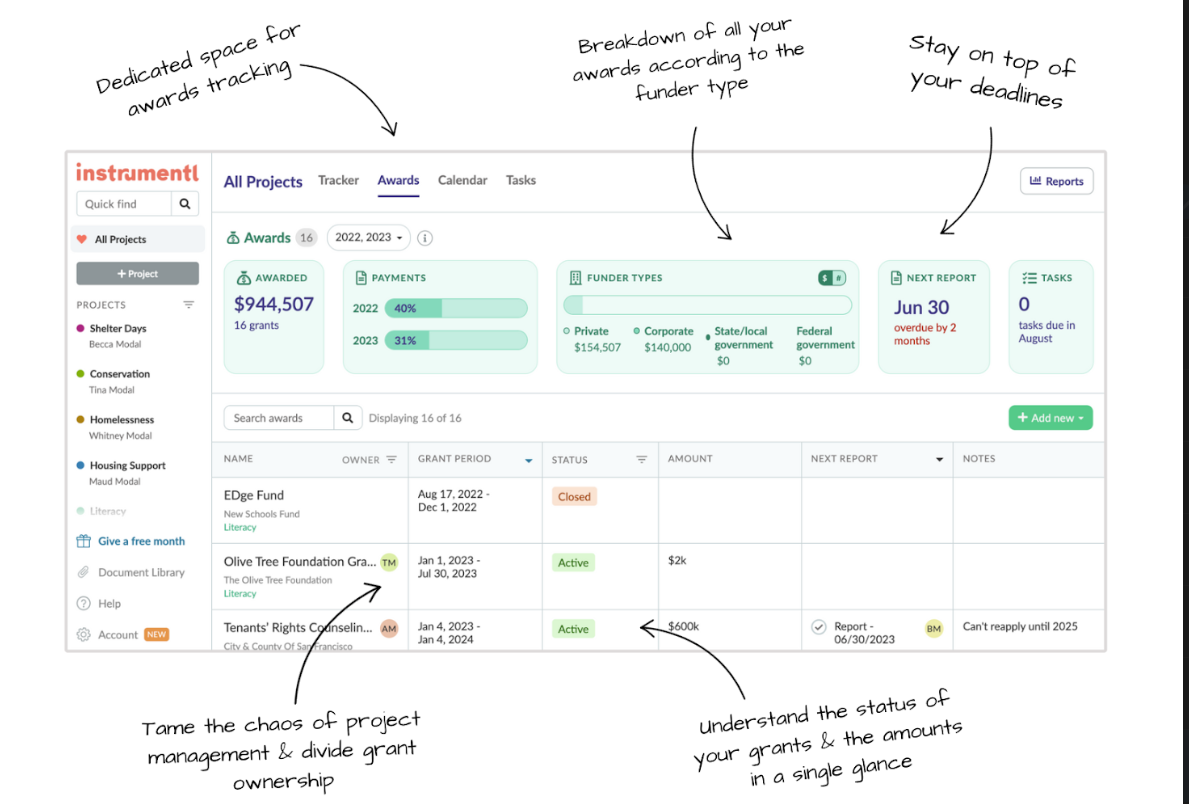
Instrumentl’s grant tracker is a dynamic oversight tool far beyond what a static spreadsheet can offer.
Team collaboration tools - Instrumentl’s collaboration tools create shared accountability across your team - without relying on disconnected spreadsheets, email threads, or project management tools.
You can assign specific action items to team members, set internal deadlines, and monitor progress directly within each grant record - all within a centralized workspace. This eliminates version confusion, minimizes back-and–forth emails, and reduces the risk of missed deadlines.
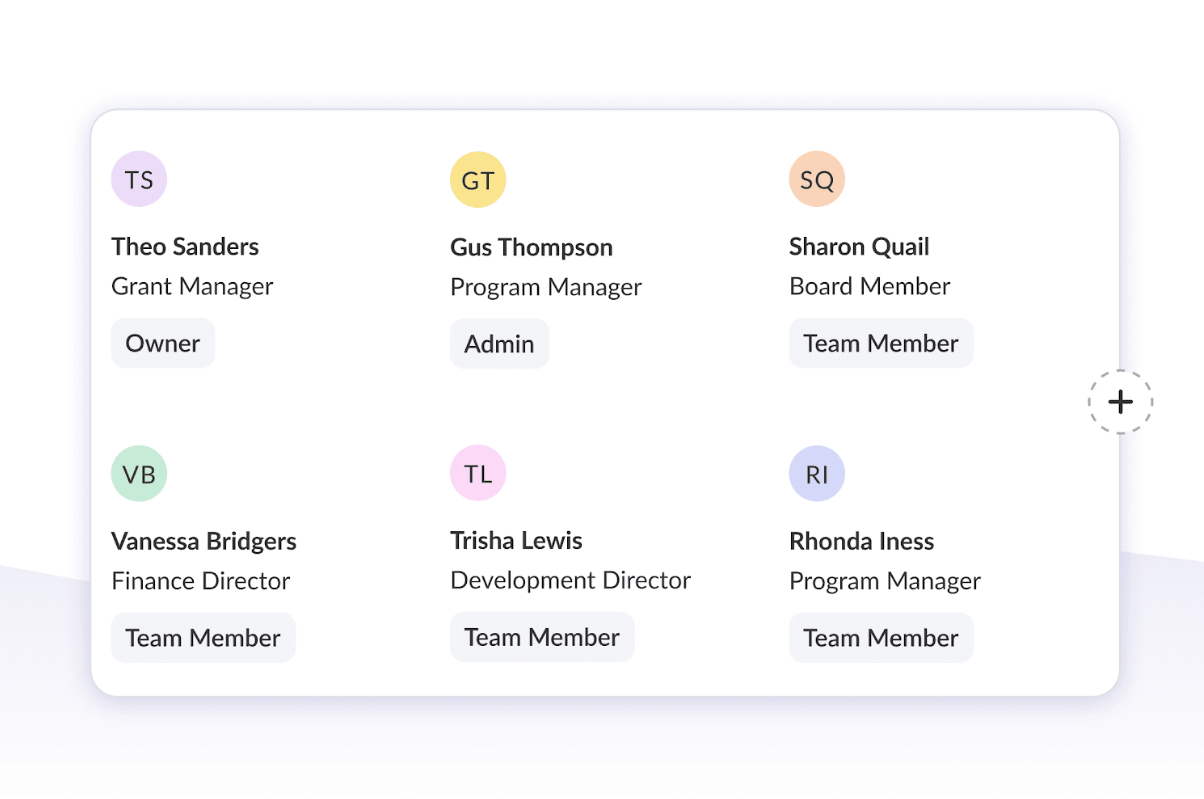
By embedding collaboration directly into your grant pipeline, Instrumentl helps move teams from reactive coordination to a structured, transparent workflow.
You can assign tasks to members of your grant team
Spend-down tracking - The spend-down tracking tool helps you forecast, monitor, and manage awarded funds throughout the grant period.
With this tool, you can see:
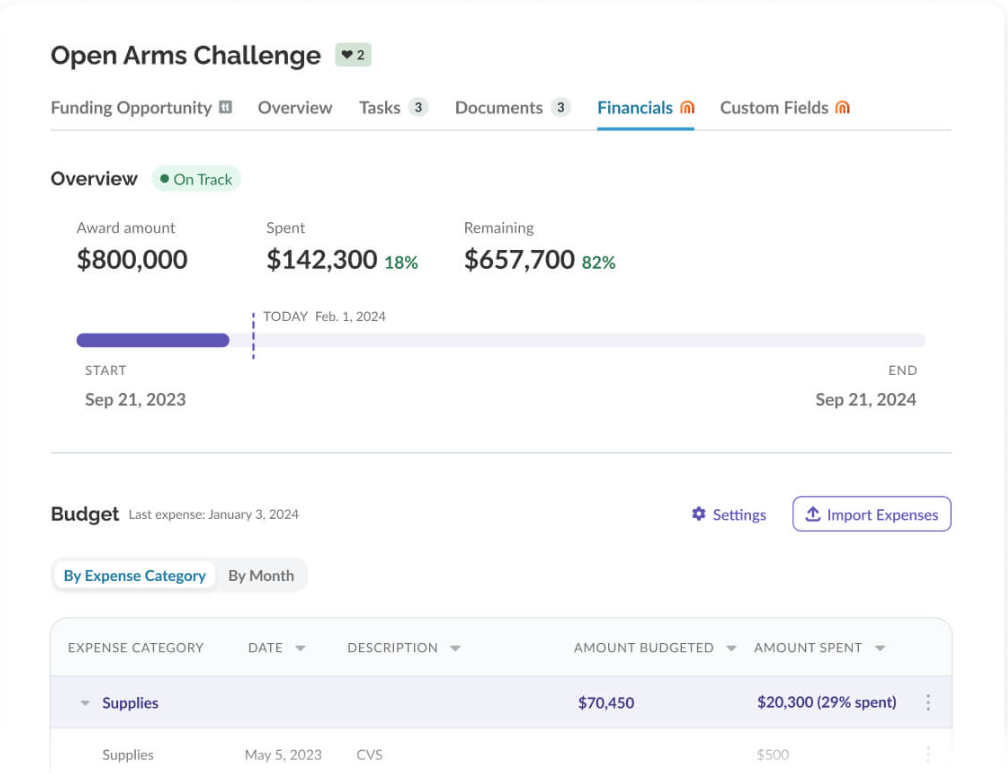
Instrumentl’s spenddown tracker allows you to quickly assess whether spending is pacing appropriately relative to the grant timeline and proposed budget.
AI-assisted proposal support - Instrumentl Apply draws from your stored documents, past proposals, and program descriptions to help you:
Because the tool is connected to your document library and project workspace, it works within the context of your organization’s voice and strategy - not in isolation.
Instrumentl Apply turns existing proposals and program materials into tailored draft responses - without starting from scratch.
Pricing
Instrumentl offers three nonprofit subscription tiers, plus custom Enterprise and University plans. All plans include a 14-day free trial and discounted annual pricing.
Popularity
Instrumentl is reviewed on independent platforms where feedback consistently highlights its usability, organization, and depth of funder intelligence.
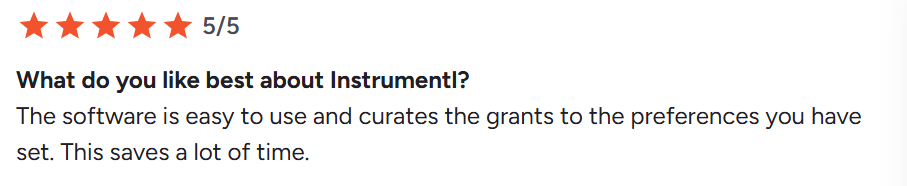
On Capterra, one nonprofit director described Instrumentl:
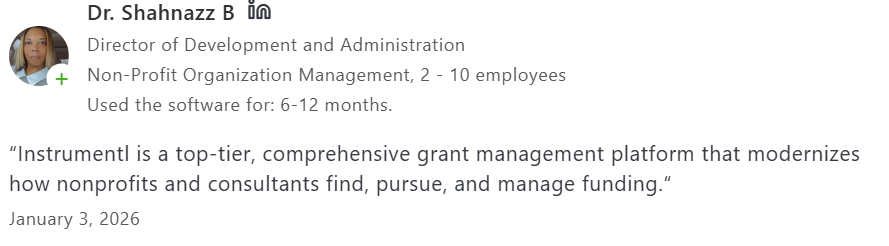
One G2 user emphasized both ease of use and search precision:
As with most comprehensive platforms, some reviewers note that subscription cost may be a consideration for smaller nonprofits operating within tight budgets. However, many users frame the value in terms of time saved and improved organization.
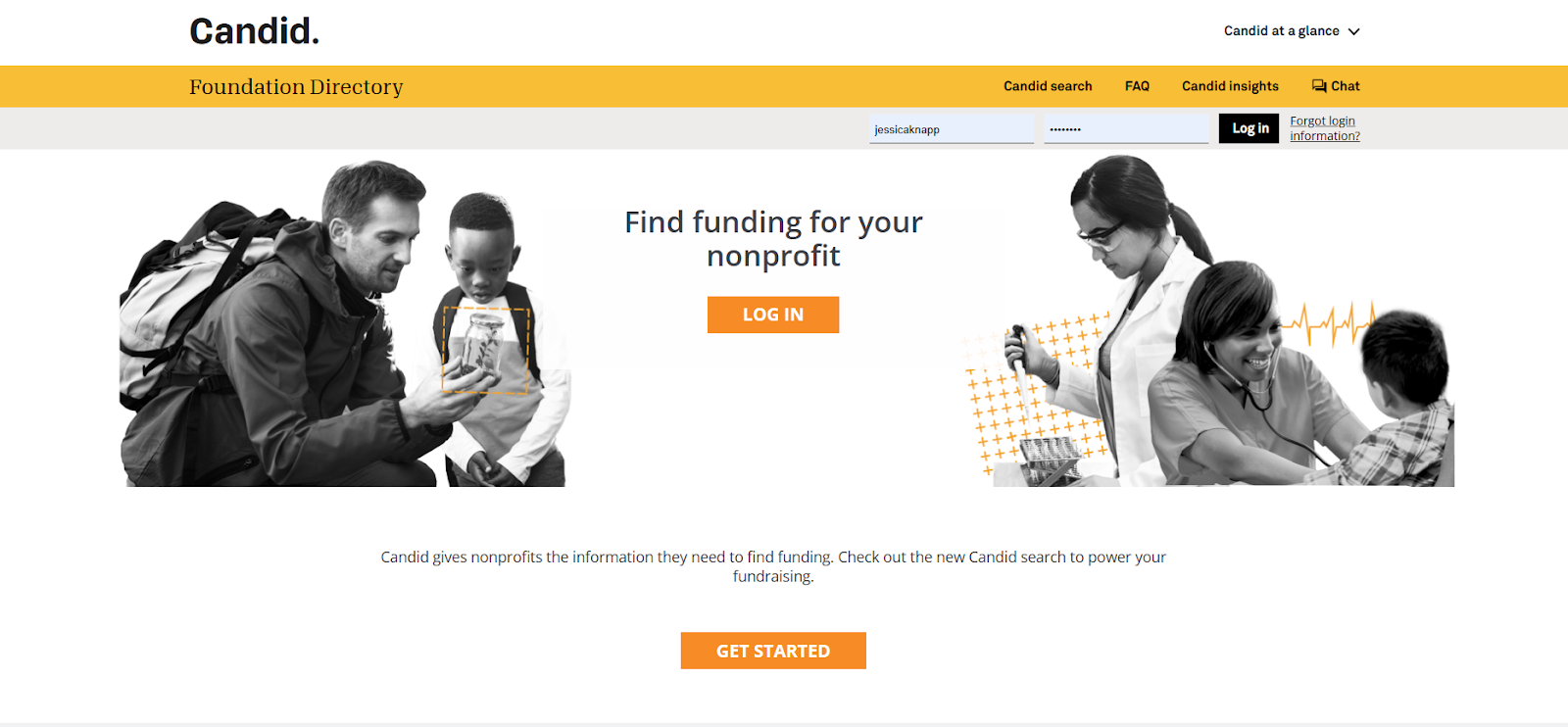
Best For: Foundation Directory Online is best for organizations conducting deep foundation research and analyzing historical giving patterns.
Foundation Directory Online (FDO), by Candid, is one of the longest-standing tools in the grant research space. It’s primarily designed for foundation prospect research - helping users analyze historical giving patterns and identify potential funders.
If your focus is understanding which foundations fund organizations like yours - and at what level - FDO can be a useful search resource.
Types & Volume of Grants
Foundation Directory Online provides access to 225,000+ foundation profiles, making it one of the most extensive foundation-focused databases available.
It is important to note that FDO is focused specifically on:
It does not function as a real-time database of active grant opportunities, nor does it aggregate corporate, state, or federal grants into a single searchable list of current opportunities.
Core Features
These features make it particularly strong for researching foundation fit and analyzing giving history.
Pricing
Premium plans begin at approximately $3,499 per year, with higher-tier plans also available.
Limited free access may be available through public libraries and nonprofit resource centers.
Popularity
In reviewing recent user feedback, we found comments noting that the annual cost can be high relative to smaller nonprofit budgets.

Other reviewers noted that recent interface updates have made the platform harder to navigate, with less flexibility in searching and filtering than in prior versions.
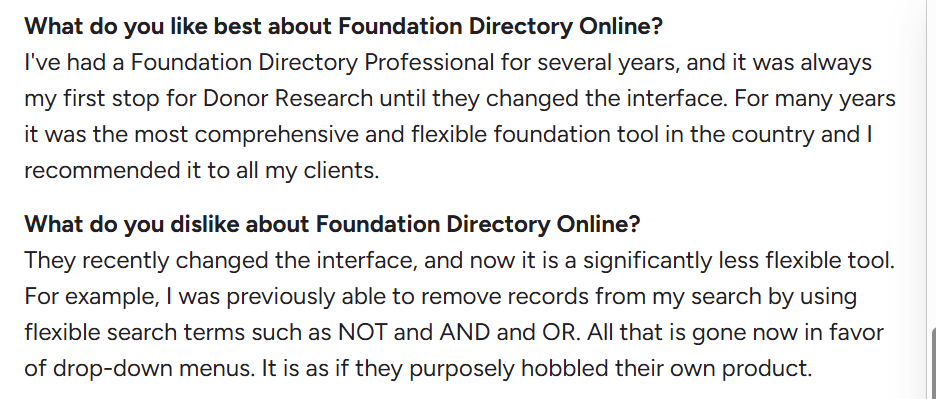
As with any research platform, overall experience may depend on how frequently your team uses the tool and how heavily you rely on advanced filtering capabilities.
Foundation Directory Online is strongest when your primary need is deep foundation research. Organizations pursuing multi-sector funding (corporate, government, and foundation) may need additional tools to cover the full funding landscape and manage their workflow.
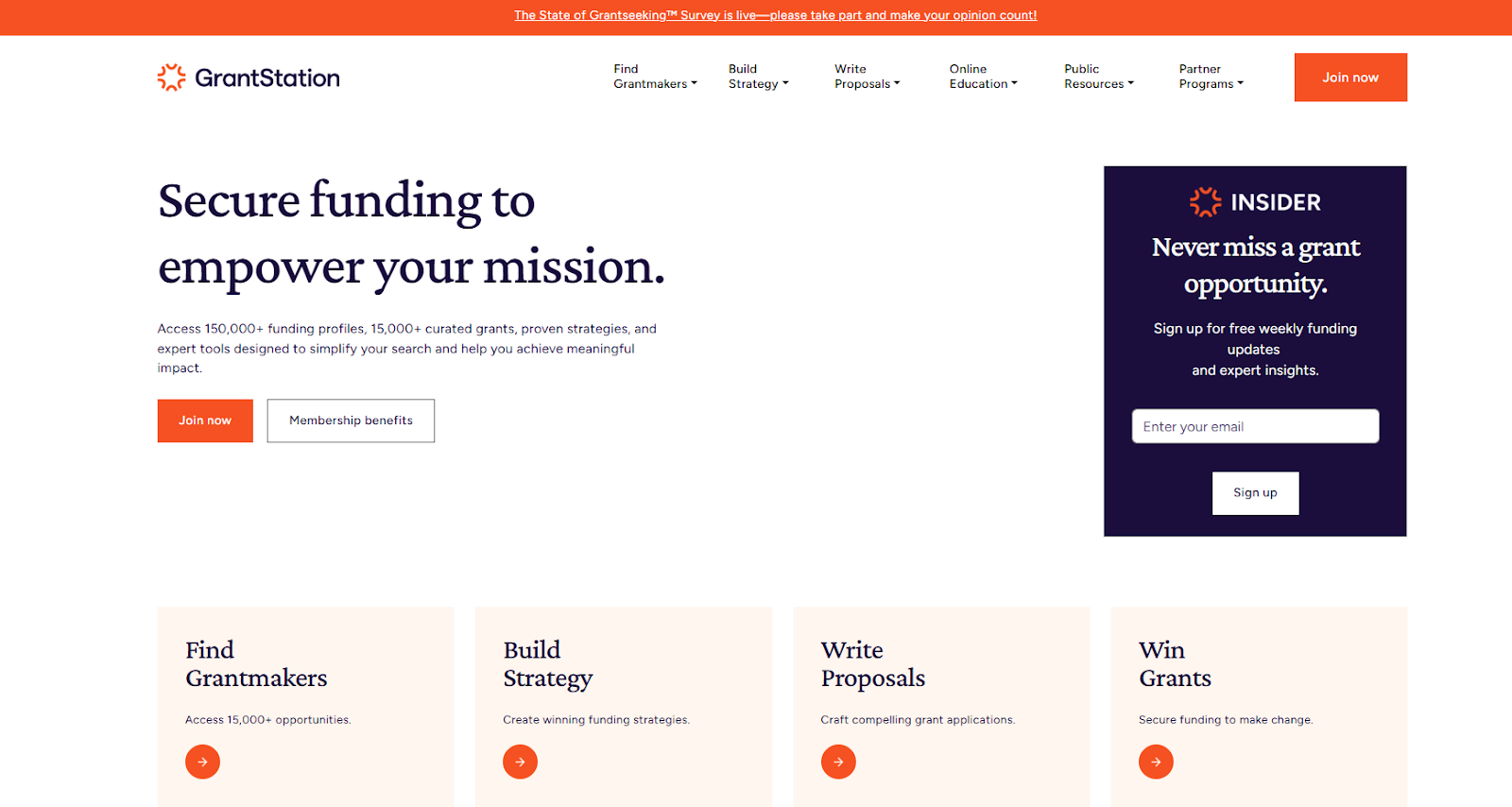
Best For: GrantStation is ideal for organizations seeking broad opportunity discovery and educational resources.
GrantStation is a searchable grant database that provides access to a range of funding opportunities across foundations, corporations, and government agencies.
It’s often used by nonprofits that want a centralized place to browse opportunities and access supplemental educational materials.
Types & Volume of Grants
GrantStation includes opportunities across:
The platform does not publicly advertise a total number of active opportunities, but it offers broad coverage across funding categories and geographic areas.
Core Features
GrantStation’s strengths lie in discovery and learning support. Users can identify opportunities and access summary-level information, though deeper funder intelligence and built-in lifecycle tracking may require additional tools.
Pricing
GrantStation is approximately $699 per year, though discounts are often available through nonprofit associations and partner organizations.
Popularity
GrantStation is reviewed on platforms such as Capterra and G2.
In reviewing user feedback, we found comments noting that the platform can take significant time to learn, may not feel intuitive at first, and can be difficult to navigate.
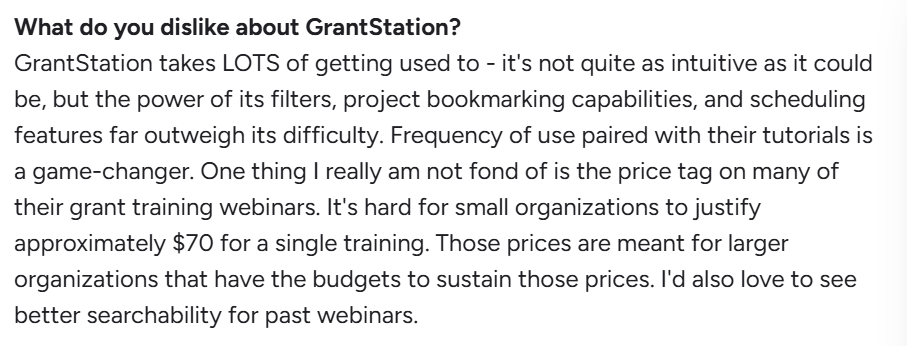

As with any platform, ease of use and learning curve may vary depending on your team’s familiarity with grant research tools.
GrantStation can be a solid option for organizations seeking a broad view of funding opportunities, along with educational support. Teams managing multiple deadlines or seeking deeper fit analysis may need a more robust workflow and tracking infrastructure.
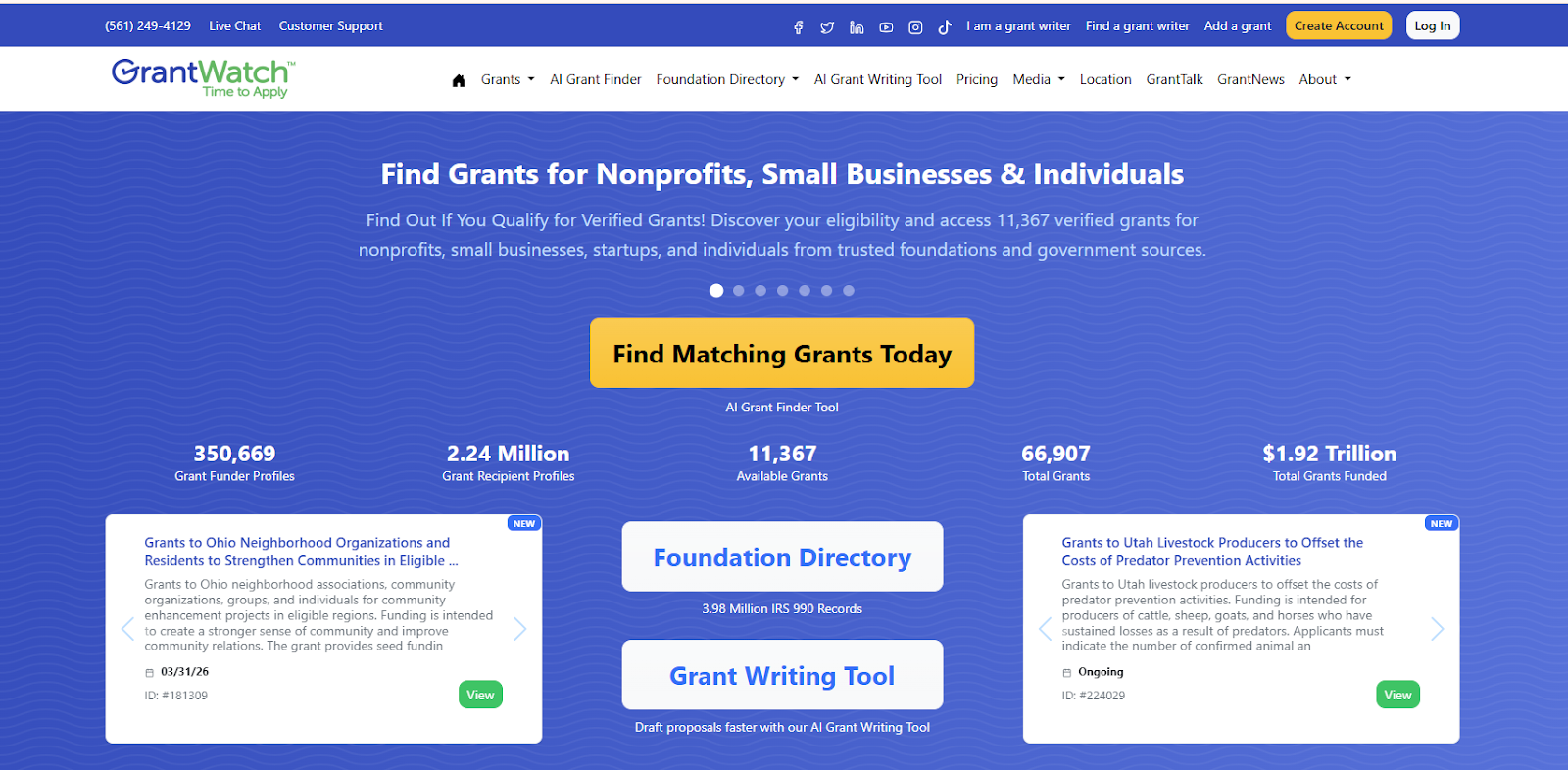
Best For: GrantWatch is best for budget-conscious organizations that want access to verified grant listings but do not need advanced management tools.
GrantWatch is a lower-cost grant listing platform that aggregates funding opportunities for nonprofits, small businesses, and individuals.
It is primarily designed for opportunity discovery rather than long-term pipeline management.
Types & Volume of Grants
GrantWatch advertises 11,000+ active listings at any given time. These listings include:
Core Features
Pricing
Approximately $199 per year.
Popularity
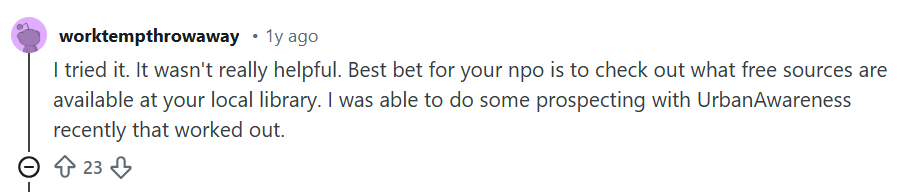
Independent user reviews for GrantWatch are limited - and difficult to find on major software review platforms.
In researching user sentiment, we found the following Reddit discussion in which a user said they didn’t find the tool particularly helpful for serious grant research.
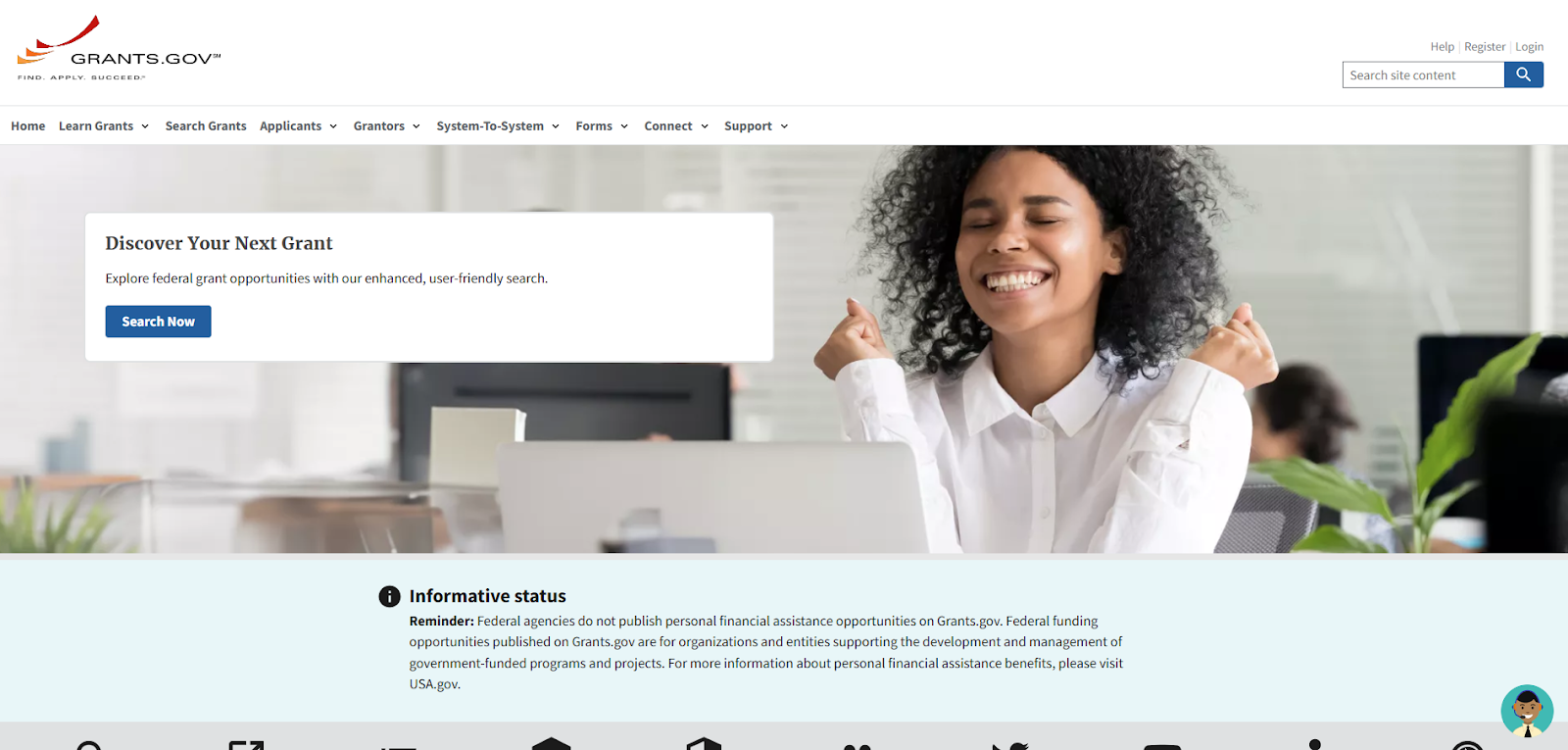
Best For: Grants.gov, the official federal portal for US government funding opportunities, is best for nonprofits pursuing federal funding. This site serves as the only centralized location where federal agencies publish Notices of Funding Opportunity (NOFOs), and application materials.
Types & Volume of Grants
Grants.gov lists federal government grants only.
Opportunities are posted directly by federal agencies and updated regularly. At any given time, between 2,000 to 4,000 active federal funding opportunities are listed, depending on the funding cycle.
Core Features
Grants.gov provides comprehensive federal listings, but it does not offer built-in funder intelligence, cross-sector research, or grant pipeline tracking tools.
Price: Free.
Grants.gov is indispensable for federal funding. However, because it focuses exclusively on government opportunities and lacks workflow management features, many organizations use it alongside other tools to manage their broader grant strategy.
Popularity
As the official federal grant portal, Grants.gov is widely used by organizations pursuing government funding and serves as the primary access point for federal opportunities. While comprehensive, the platform can be challenging to navigate; its search tools, filtering options and submission processes are often complex, requiring significant time and familiarity to use effectively.
Best For: Researching specific corporate grant programs directly from the source.
Corporate giving websites are individual company-run pages that outline their philanthropic priorities, eligibility criteria, and application processes.
Pricing: Free
Types & Volume
Corporate websites only list their own funding opportunities. Volume varies widely across companies and funding cycles.
As an example, Bank of America’s corporate giving portal includes information on grant programs, application guidelines, and how to apply.
Core Features
Corporate giving websites aren’t centralized grant databases.
They are individual pages created by companies to share information about their own philanthropic programs. As a result, their features are typically limited to information about the specific company’s funding opportunities, including information such as:
Best For: Community foundations often fund place-based initiatives and can be valuable partners for local or regional nonprofits.
Types & Volume of Grants
These websites typically include only grant opportunities specific to that particular community foundation. While funding opportunities vary from foundation to foundation, many community foundations often fund place-based initiatives that benefit their local community.
Core Features
Community foundation websites are designed to share information about funding opportunities managed by that specific foundation. They are not intended to function as broad grant search databases.
These websites will share information on the foundation’s specific funding opportunities and grant cycles, including:
There are many grant websites available - and each serves a different purpose.
Some help you research foundations.
Some list federal opportunities.
Some aggregate funding announcements at a lower price point.
But if grants are a big part of your revenue strategy, you need more than just a searchable database.
You need:
Instrumentl brings all of that together in one platform.
With 30,000+ active grant opportunities, 400,000+ funders, 990-based intelligence, intelligent matching, deadline tracking, collaboration tools, and spend-down management, Instrumentl is designed to support the full grant lifecycle - from initial research through post-award management.
For grant professionals who want to reduce manual tracking, eliminate spreadsheet chaos, and build a structured, year-round grant program, Instrumentl offers the most comprehensive solution available.
You can explore how it works with a 14-day free trial - no credit card required.
Because the best grant website isn’t just the one that helps you find funding - it’s the one that helps you build a sustainable future.
The best grant website depends on your goals. For nonprofits building a year-round grant strategy, Instrumentl offers the most comprehensive option - including a 14-day free trial.
Unlike search-only databases, Instrumentl combines:
This allows nonprofits to move beyond browsing opportunities and instead build a structured, sustainable grants program.
There’s no fixed cap on how many grants your nonprofit can apply for - but there is a strategic number to aim for based on your funding goals and typical success rates.
A good rule of thumb used by experienced grant professionals is to apply for about 250% of the funding you want to win to account for an average win rate (around 40%).
Put another way: if you aim to raise $1 million through grants, a strategic target would be to apply for about $2.5 million in potential funding.
Instrumentl does more than aggregate grant opportunities. It helps organizations build a clear, intentional grant strategy - from identifying good-fit prospects to managing projects through submission and post-award management.
At the discovery stage, Instrumentl uses intelligent matching to surface relevant opportunities based on your nonprofit’s mission, location, and program focus - saving time compared to manual Google searches.
But discovery is only the first step. Instrumentl also helps organizations:
Once opportunities are saved, teams can assign tasks, set deadline reminders, store proposal materials, and track awards and declines - all within the same system.
This combination of funder intelligence, filtering precision, and workflow management helps organizations move from reactive grant searching to strategic grant planning.
Yes! Some platforms and websites provide free access to funding information, including:
Here’s the catch: these sites typically require significant manual effort to track down deadlines, determine fit, and find funder guidelines.
Some subscription-based platforms offer free trials that allow organizations to test features such as intelligent matching, centralized tracking, and funder analytics.
While free tools reduce cost barriers, organizations managing multiple grants often benefit from platforms that centralize research, tracking, and reporting in one place.
The right features depend on how central grants are to your funding model.
For organizations submitting multiple applications per year, key capabilities typically include:
A grant website that combines research and workflow management can reduce manual processes and help organizations build a more consistent, sustainable grant strategy over time.
Table of contents

