Unlock the power of RFP grants with our comprehensive guide. Discover what they are, why they matter, where to find them, and how to respond to RFP.

TOPIC
AUDIENCE
RFPs— or Request for Proposals — are like the light houses on the shores of fundraising seas, guiding your nonprofit into land where you can get more funding for your next voyage. Spotting them is key, however.
In this comprehensive guide, we will delve into the world of RFPs for grants, explaining what they are, why they matter, where to find them, and how to write successful RFP grant applications.

Before diving deeper, let’s start with the basics: What exactly is an RFP?
An RFP, which stands for Request for Proposal, is an invitation to nonprofit organizations asking them to submit detailed proposals for specific funding opportunities.
These invitations are most often extended by foundations and government agencies who have funding available to award to worthy causes.
Essentially, RFPs represent opportunities for nonprofits to present their projects and potentially receive funding in return.
Most RFPs include common elements, such as:
Here’s an example of an RFP recently released by the Brain Research Foundation. As you can see below, the RFP details the grant amount, eligibility requirements, and more.


Now that we’ve explained what RFPs for grants are, it’s time to outline why they are so important. Here are four reasons why RFPs for grants are worth pursuing as a nonprofit organization:
RFPs for grants function as financial catalysts for nonprofits. They offer a structured channel through which nonprofit organizations can secure funding for projects that are intricately aligned with their missions.
Whether it's the:
RFPs serve as the lifeblood of nonprofit projects, fueling progress, and enabling social change.
Beyond their financial function, RFPs for grants act as essential bridges that connect the aspirations of nonprofit organizations with the priorities of funders and grant-giving entities.
Many funders have specific areas of interest they wish to support, and they often detail these priorities in their RFPs.
When nonprofit goals align seamlessly with the strategic objectives of such funders, it not only opens doors to collaborative partnerships but also ensures that the support received goes hand in hand with shared values and goals.
These partnerships have the potential to drive long-term, sustainable impact, transcending the boundaries of individual projects or initiatives.
RFP for grants come with a set of rigorous application and reporting requirements.
These stringent guidelines are not mere formalities; they are a testament to the sector's commitment to responsible stewardship.
Nonprofit organizations that secure RFPs for grants are held to high standards of accountability and transparency. Every dollar received is expected to be used responsibly to drive positive impact.
Accountability is essential, ensuring resources are channeled effectively toward achieving meaningful impact.
RFPs for grants often challenge nonprofits to think creatively and innovatively. In the competitive landscape of grant-seeking, nonprofits are encouraged to develop unique solutions to complex social issues. This not only drives innovation within the nonprofit sector but also leads to the development of groundbreaking programs and initiatives.
RFPs for grants provide the necessary impetus for nonprofits to push boundaries, experiment with new approaches, and ultimately, achieve greater impact.

RFPs for grants, as gateways to crucial funding for nonprofit initiatives, vary in form and function. Understanding the two primary types—Open RFPs and Closed RFPs—is essential for navigating the complex landscape of grant opportunities effectively.
Open RFPs are what they sound like—they are open for any eligible nonprofit to apply to.
Open RFPs are similar to an open call for ideas, emphasizing the belief that transformative solutions can emerge from various corners of the nonprofit landscape.
They are not constrained by exclusivity and are typically advertised widely, often accessible online through the organization’s website or within grant databases.
Closed RFPs, in contrast, are more like exclusive clubs in the grant-seeking world.
These opportunities are highly selective, targeting specific organizations and inviting them to apply for funding. You cannot apply for a closed RFP unless you’re invited to do so by the funder.
If your nonprofit receives an invitation to a closed RFP, consider it an acknowledgment of your organization's alignment with the funder's vision and a chance to join an exclusive circle of change-makers.
For tips on how to get noticed by invite-only funders, check out this blog.
The RFP Goldmine: 3 Sources to Find Them

In this next section, we are going to cover how and where nonprofits can discover these valuable RFP opportunities that could potentially breathe life into their projects.
The internet is a treasure trove of information, and online RFP directories are your trusty shovels.
Numerous websites and platforms list RFP opportunities.
Websites like Instrumentl, Foundation Directory Online (FDO), and GrantStation list active RFPs in their databases, making it easy for nonprofits to search for opportunities that align with their mission and focus areas.
Instrumentl has over 390,000 funders and 12,500+ active funding opportunities nonprofits can search through, making Instrumentl the most comprehensive source of RFPs for grants.
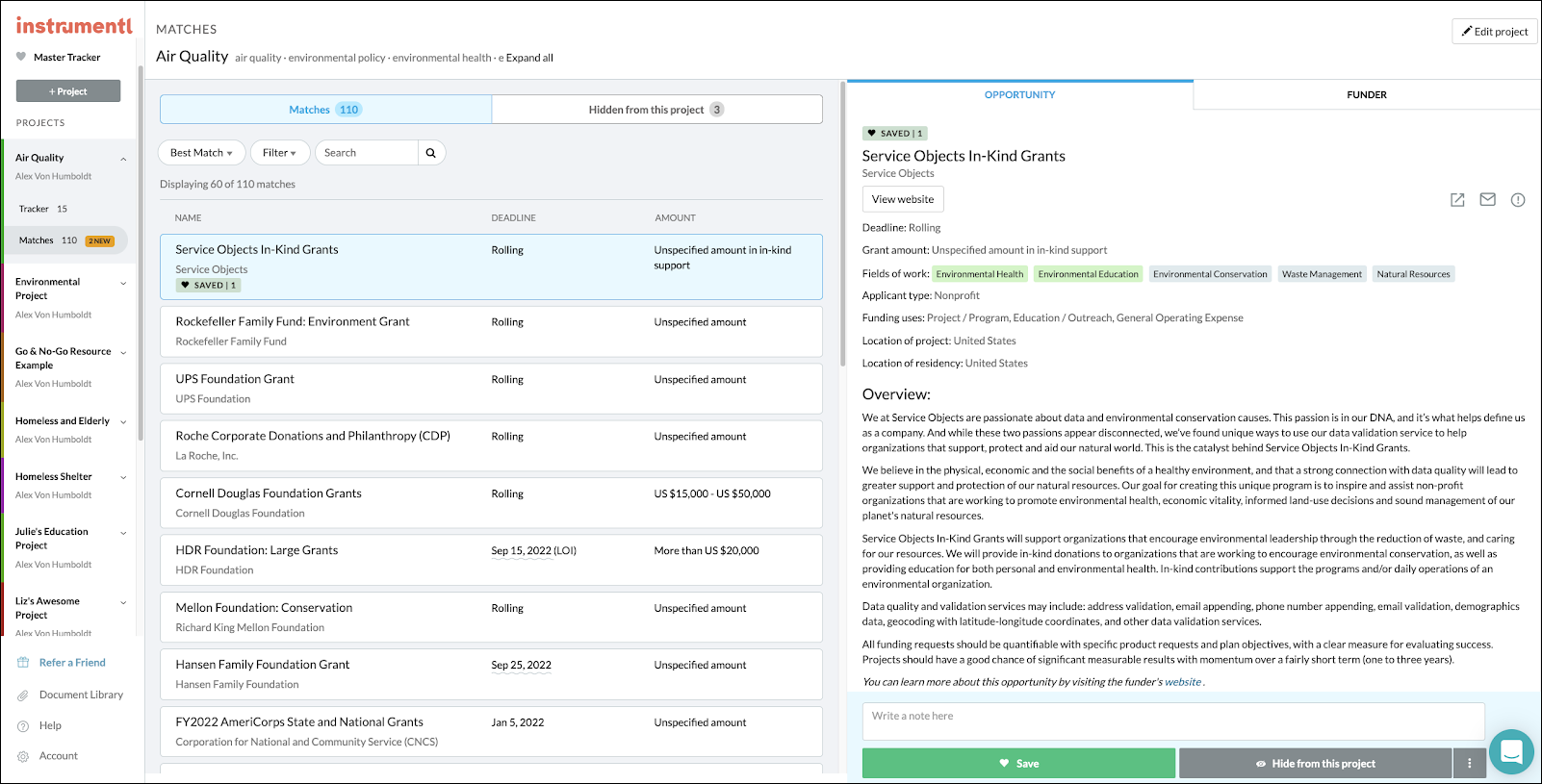
You can search Instrumentl’s RFP database based on criteria such as geographical location, industry, or funding category, ensuring that you can pinpoint funding opportunities tailored to your nonprofit's specific needs. Try it out today!
Networking within your industry can also be a valuable resource for RFP discovery.
Collaborative partnerships and alliances within your nonprofit's sector often serve as conduits for sharing RFP opportunities among their members. Joining associations, forums, or online groups related to your nonprofit's focus area can lead to valuable RFP discoveries.
Industry-specific networks are often privy to insider information about upcoming RFPs, giving you a competitive edge in identifying and pursuing these opportunities.
Engaging with peers and colleagues who share similar goals and interests can also provide insights into potential funding avenues that you might not have encountered otherwise.
Nonprofit conferences and workshops provide unique opportunities to connect with funders and grantmakers directly.
These events often feature dedicated sessions on upcoming RFPs, providing firsthand insights into potential funding avenues.
Attending workshops and conferences related to your nonprofit's field not only expands your knowledge but also opens doors to valuable RFP discoveries.
Building meaningful relationships with funders, program officers, and fellow nonprofit professionals at these events can be advantageous. These connections can lead to valuable information about RFP opportunities and potentially result in collaborations that extend beyond the scope of specific RFPs.
Tips to Ace Your RFP Grant Application

Now that you've found an RFP opportunity, the next step is to prepare a winning proposal. The success of your grant proposal hinges on how well you present your case to potential funders.
A compelling grant proposal demands a strategic approach and meticulous attention to detail so that it not only meets the RFP criteria but also stands out among the competition.
Here are some tips to help you create a strong and compelling RFP grant proposal.
Start by thoroughly understanding the RFP's requirements and guidelines.
Pay close attention to eligibility criteria, deadlines, submission instructions, and evaluation criteria.
Tailor your application to meet these specific requirements. Failing to adhere to these essential guidelines can result in your proposal being disqualified or overlooked, potentially missing out on valuable funding opportunities. It's crucial to demonstrate your organization's commitment to precision and professionalism by meticulously following these requirements.
Building a team with diverse skills and expertise is crucial.
Include individuals with experience in grant writing, project management, program development, and budget planning. Their collective strengths will enhance the quality of your proposal.
Your proposal should tell a compelling story.
Clearly articulate your nonprofit’s mission, impact, and unique strengths. Explain how your project aligns with the funder's priorities and how it will create meaningful change. Use storytelling techniques to engage the reader and make a lasting impression.
Develop a detailed and realistic proposal budget that aligns with your project's scope and objectives. Ensure that every expense is accounted for and that your budget reflects efficiency and sound financial planning.
Grant proposals commonly include the following elements related to budget planning:
Grantmakers appreciate well-thought-out financial plans that demonstrate responsible stewardship of funds.
If your nonprofit organization has previously applied for RFPs for grants, leverage feedback and lessons learned from past experiences.
Continuous improvement is essential. Analyze feedback provided by grantmakers and reviewers to identify areas of strength and weakness. Incorporate these insights into your current application to strengthen your proposal.
Finally, proofread your proposal meticulously.
Typos, grammatical errors, or formatting issues can harm your credibility. Review your proposal carefully, and consider having someone else review it as well. Submit your application well in advance of the deadline to avoid any last-minute technical issues.
By following these tips and approaching your RFP application with careful planning and attention to detail, you can increase your chances of securing the funding needed to drive your nonprofit's mission forward.
Building Relationships With Funders for RFP Grant Success

When it comes to securing RFPs for grants, your nonprofit's success relies not only on the strength of your grant proposals but also on the quality of the relationships you build with potential funders.
These connections are often as critical as the RFP grant proposals themselves when it comes to securing funding for your nonprofit's initiatives.
Before you even begin writing your RFP grant proposal, it's essential to lay the groundwork for success. This includes establishing meaningful connections with potential funders.
Here's how you can effectively build relationships before submitting your grant application:
After you've submitted your RFP grant proposal, the journey toward building and nurturing relationships with potential funders continues.
Whether your initial proposal was successful or not, maintaining these connections can open doors to future opportunities. Here's how you can foster relationships beyond the application stage:
Building relationships with funders is an ongoing and dynamic process. It's not solely about securing funding but also about forging partnerships that align with your nonprofit's mission and vision. By actively nurturing these relationships, your nonprofit can position itself as a trusted and committed partner, increasing the likelihood of RFP grant success and fostering long-term collaboration.
Wrapping Up: The Next Steps

The journey of seeking RFPs for grants in the nonprofit world requires building relationships and crafting compelling proposals that resonate with funders. It is also important to keep in mind that persistence and alignment with funders' priorities are equally crucial to securing RFPs for grants.
With dedication and a strategic approach, your nonprofit can unlock opportunities that drive your mission forward. The next steps are yours to take, and the possibilities are endless! Don’t forget to check out Instrumentl to start searching for RFPs aligned with your nonprofit’s mission today.
RFP grants, or Request for Proposal grants, are funding opportunities where organizations outline specific objectives and invite proposals from eligible entities to address those objectives. Applicants must submit detailed plans that meet the outlined criteria.
You can find RFP grant opportunities on specialized grant databases, government websites, nonprofit organizations, and platforms like Instrumentl, which consolidate available opportunities in one place.
A grant proposal should include a clear statement of purpose, objectives, methodology, budget plans, and how your proposal aligns with the RFP's goals. Following the specific guidelines provided in the RFP is crucial.
Eligibility for an RFP grant is specified in the proposal guidelines. Review the eligibility criteria, including organization type, project scope, and geographical limitations, to ensure your organization qualifies.
Common mistakes include failing to meet submission deadlines, not adhering to RFP guidelines, providing incomplete information, and neglecting to tailor your proposal to the funder's specific goals and priorities.
Table of contents

