Learn best practices for handling grant funds, tracking expenses accurately, and staying compliant with grant requirements. Ensure the success and sustainability of your grant-funded projects

TOPIC
AUDIENCE
For nonprofits, securing and managing grants is often an intricate and challenging task—especially when it comes to the management of grant money.
Effective grant financial management is crucial for the sustainability and successful implementation of grant-funded projects. In this article, we'll explore:
Are you ready for a no-nonsense guide to grant finances? Let's dive in!
According to the U.S. Government Accountability Office, effective grant financial management is an essential aspect of a project's success.
Grant financial management involves the careful management of grant funds to ensure alignment with your project goals and compliance with the grantor (funder)’s requirements. Authoritative standards such as the Office of Management and Budget provide essential frameworks for nonprofits to ensure proper use and reporting of grant funds."
It’s about effectively overseeing and managing your grant funds.
management usually involves:
For more detailed guidance, refer to the OMB Uniform Guidance (2 CFR Part 200) and GAO Green Book for best practices in grant financial management.
The meticulous handling of grant funds ensures that every dollar is used to further your proposed project’s goals and impact.
Proper grant financial management also builds trust with stakeholders through clear, organized financial practices.
You’ll demonstrate to funders that their money is being used appropriately and that their investment aligns with their intended mission.
Properly managing your grant awards will open the door to future grant opportunities with funders.
Now that we've laid the groundwork let's dive into the actionable part: the best practices for tracking, managing, and monitoring your grants.
Understanding the intricacies of your grant agreement is the foundation of effective financial management and reporting.
Review the grant agreement carefully. Note the financial commitments. Identify any spending restrictions. Record all reporting requirements early, so your team is prepared.
Pro Tip: Instrumentl’s grant calendar makes it easy to keep track of all your grant-related deadlines in one place. Check it out below.

Another good grant management practice is to develop comprehensive financial policies, outlining how funds will be managed, tracked, and reported.
To do so:
Pro Tip: You can leverage Instrumentl's Awards View to efficiently manage your awarded grants in one place. This way, all the team members can have access to the details of all the awarded grants, and you can ensure that everyone is on the same page.
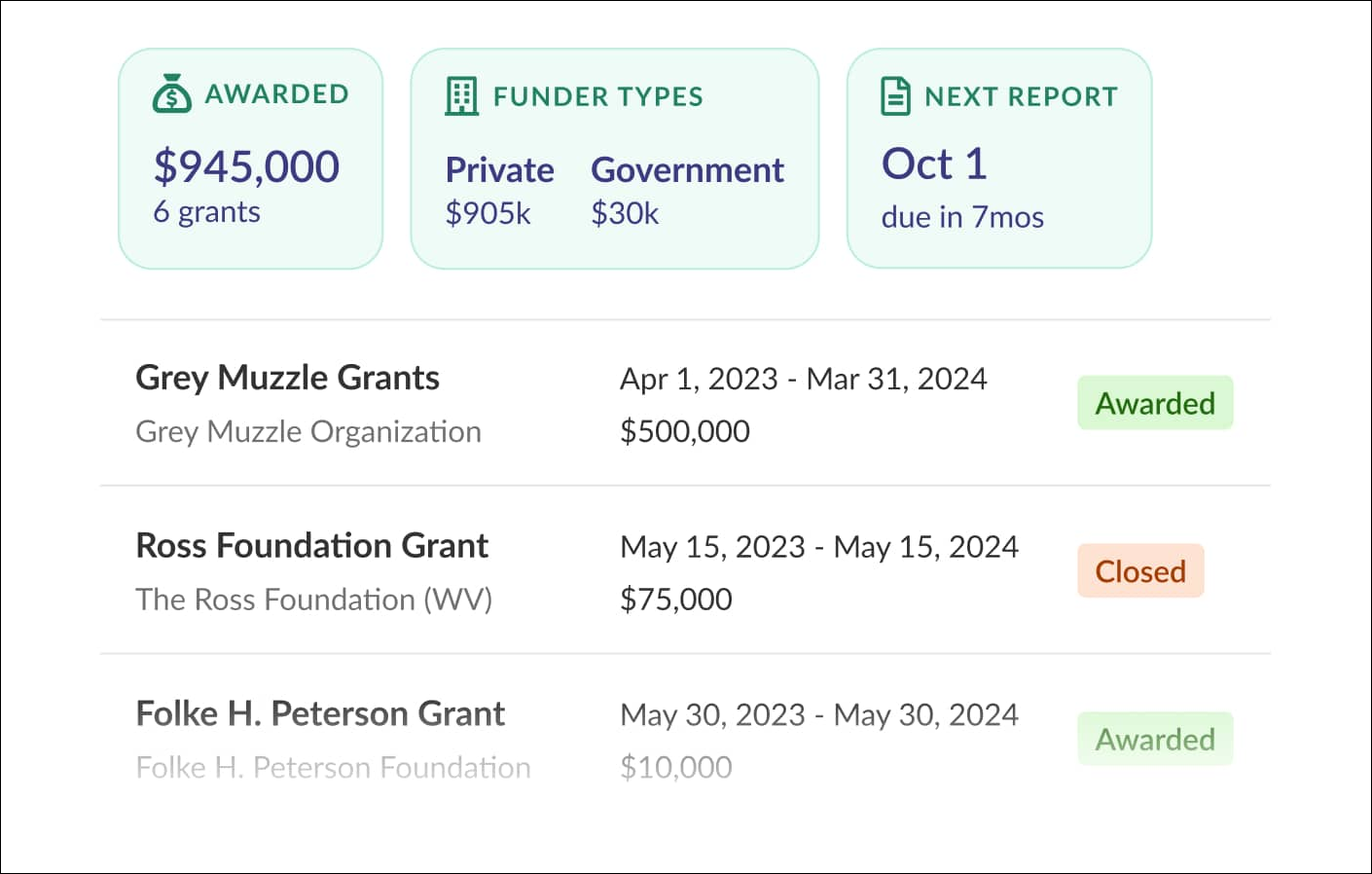
Another important grant financial management practice is to maintain separation between grant funds and your organization’s general operating funds.
This practice ensures compliance with funder guidelines, enhances accountability, and provides a clear audit trail. To segregate grant funds:
Pro Tip: Use Instrumentl's Payment Tracking feature for a detailed and visual overview of the inflow of grant funds. The tracker makes it easier to monitor and manage the financial aspects of each of your grants—all in one place. You can easily track specific payment dates and amounts for each awarded opportunity.

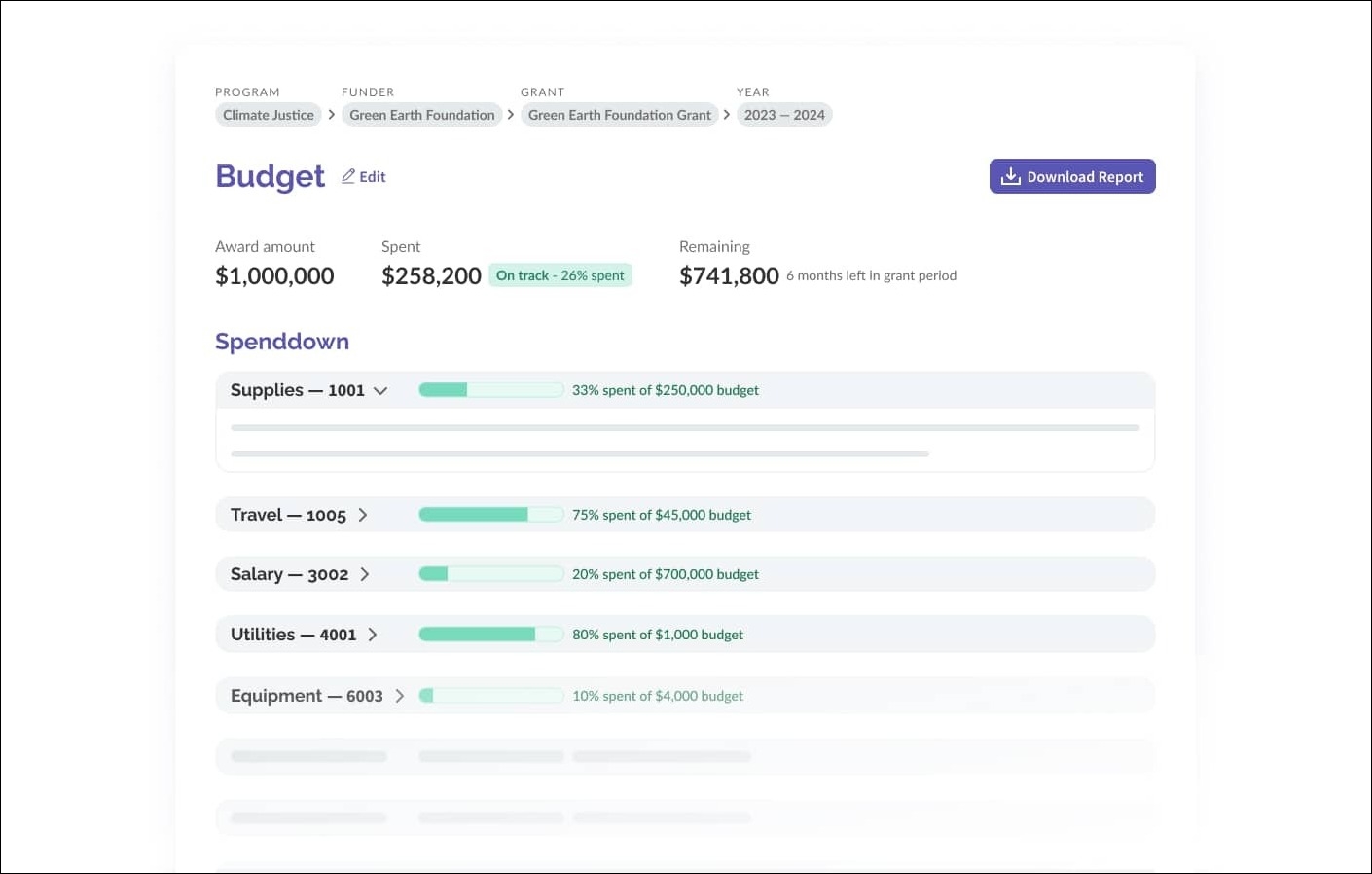
When it comes to grant management, continuously tracking expenses against the approved budget is essentially for staying on target.
You can do this by:
Pro Tip: Utilize Instrumentl's Spenddown Tracking feature to keep your team informed and on target for each of your grant budgets.
Accurate record-keeping and audit readiness are the backbone of grant financial management. Maintaining thorough, organized financial records—including all receipts, invoices, and grant-related reports—not only supports project transparency, but also prepares your organization for audits. According to the IRS, over 1.5 million tax-exempt organizations are subject to audit requirements each year, emphasizing the importance of documentation and compliance for nonprofits.
To prepare for audits and ensure compliance:
Grant Finance Checklist:
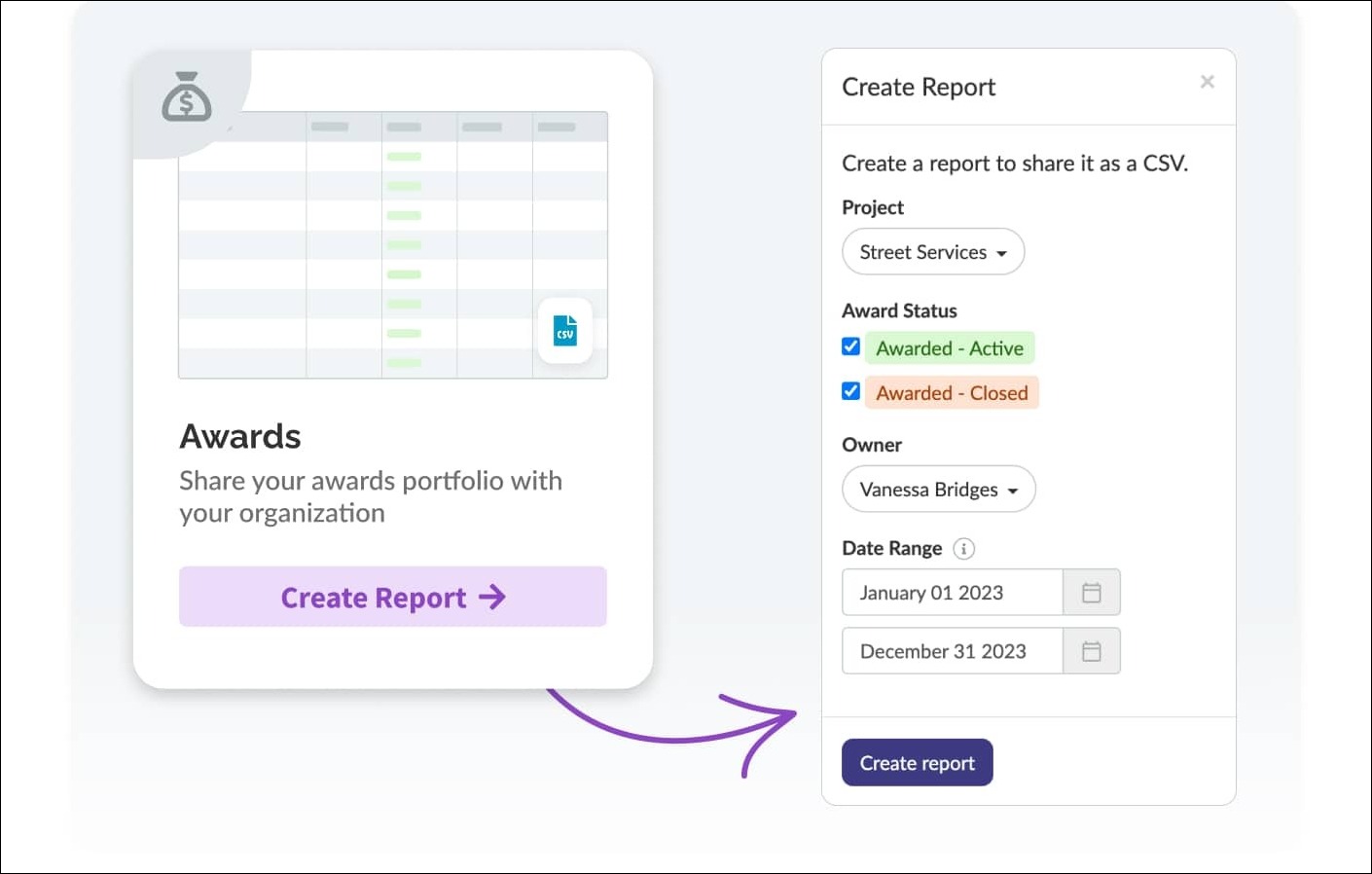
Use Instrumentl’s Awards Report to easily share grant-related information with collaborators and keep them informed.
An important practice to ensure healthy grant financial management is to implement checks and balances. Establishing internal financial controls can help you prevent fraud, costly mistakes, and other errors.
You can do this by:
Timely reporting is not only a grant financial management requirement but also an opportunity to showcase your organization's impact.
For a successful reporting process:
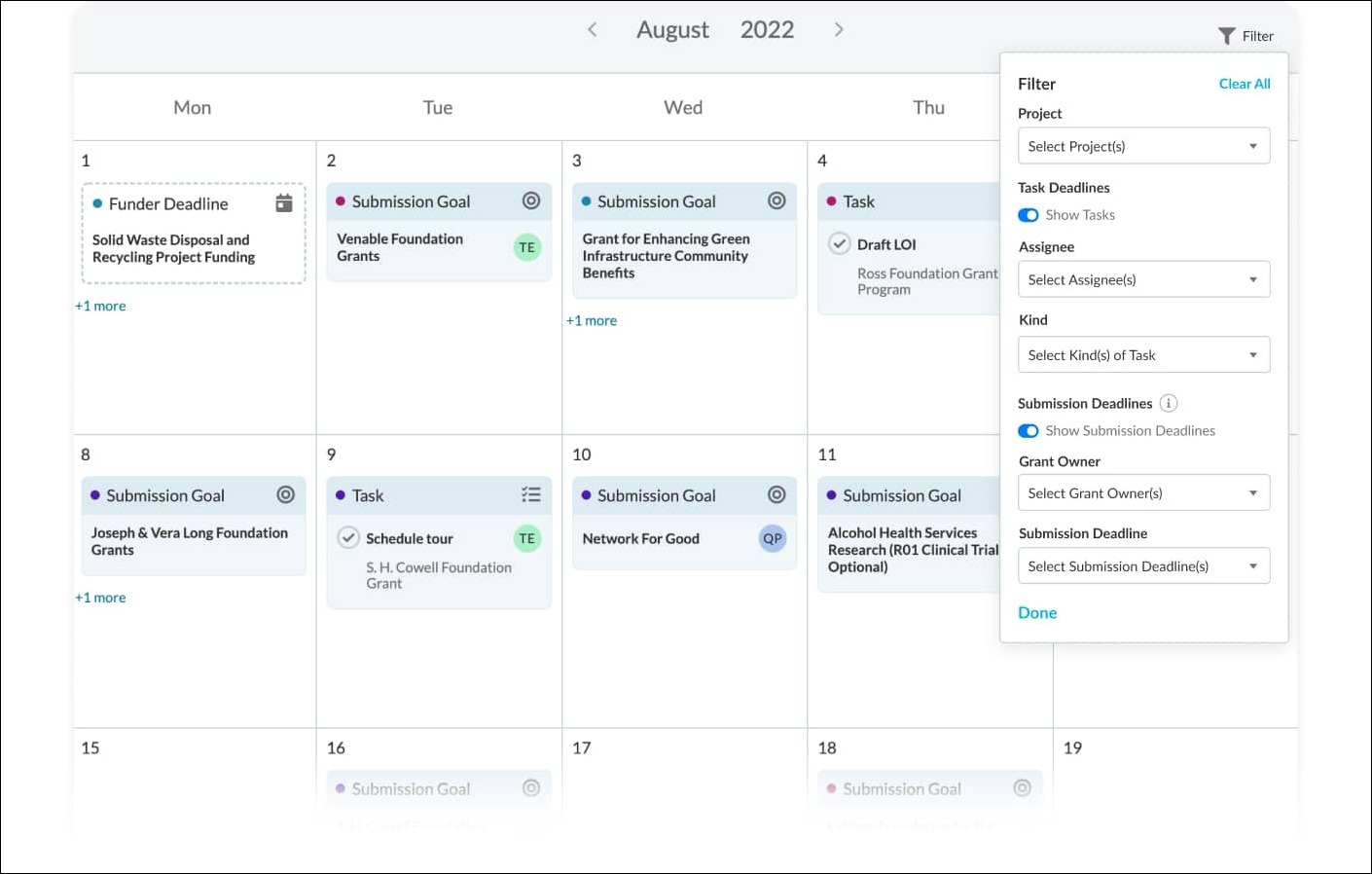
Pro Tip: Use Instrumentl's customizable and shareable calendars to effortlessly manage tasks and track deadlines. You can include specific projects in your calendar, filter by status, and stay on track with tasks that are relevant to you.
When managing grant finances, ensure that expenses charged to the grant are directly related to the grant's objectives.
Use appropriate allocation methods to distribute shared costs fairly. You can do this through:
Check out this guide to grant accounting for even more strategies for allocating costs correctly.
Make sure to keep stakeholders, including funders, informed about financial progress as it relates to your grants.
You can foster openness through regular communication by:
Remember that transparency builds trust and you need healthy communication to establish these positive relationships.
Be audit-ready by keeping financial documents well-organized and easily accessible.
You can do this through:
Pro Tip: Instrumentl’s Document Library can help you maintain your central repository for all your grant-related documents. Store documents like budgets, final proposals, executive summaries, board lists, and anything else that you’d like to keep accessible for you and your team.
It should be clear by now that effective grant financial management is necessary for project success. By implementing these best practices and leveraging Instrumentl's features, you can:
Effective grant financial management is a strategic investment in the advancement of your nonprofit’s mission. As you embark on your grant journey, remember that managing finances isn't just about numbers; it's about making each dollar count toward making a difference!
And don’t forget to sign up for a free trial of Instrumentl to experience it firsthand.
Grant financial management involves overseeing and tracking the financial aspects of a grant project to ensure compliance with grant guidelines and proper use of funds. This includes budgeting, reporting expenses, and maintaining documentation.
Proper grant financial management ensures accountability, avoids penalties or fund repayment, and maximizes the impact of the grant by using the funds effectively and in alignment with grant agreements.
The key steps include creating a detailed budget, tracking expenses regularly, maintaining accurate financial records, and preparing timely reports to submit to grantors.
There are various tools, including accounting software, grant management platforms, and templates for tracking budget and expenses, that can simplify financial management and ensure compliance.
Some challenges include lack of expertise, managing multiple funding sources, ensuring compliance with complex guidelines, and maintaining accurate records amidst limited organizational capacity.
Table of contents

