How to Write a Letter of Inquiry for a Grant (+ Free Template & Example)
A strong letter of inquiry is the fastest way to earn an invitation to submit a full proposal. This guide covers what a letter of inquiry for a grant is, exactly what to include, how long it should be, and the common mistakes that get an LOI passed over, plus a real annotated example and a free template you can copy and send.
You've found a funder who's a strong fit, and their guidelines ask for one thing before anything else: a letter of inquiry. A letter of inquiry (LOI) is a short document a funder requests before they'll accept a full proposal for grant funding. Get it right and you open the door to apply; get it right consistently and you build the funder relationships that turn into repeat funding.
Most grant professionals write their first LOI cold, with little more than a foundation's one-line submission guidelines to go on. That's a normal place to start. What separates a letter that earns a "yes, send us the full proposal" from one that gets filed away is knowing what belongs on the page and what to cut.
In this guide, you'll get:
A clear definition of a letter of inquiry for a grant and when funders ask for one
Exactly what to include, section by section, with a real annotated example
Length, tone, and the common mistakes that get an LOI passed over
If you want to start from a structure instead of a blank page, grab our free Nonprofit Letter of Intent Template. It's built in Canva, so you can drop in your logo, adjust the copy, and send.
What Is a Letter of Inquiry for a Grant?
A letter of inquiry for a grant is a one- to two-page document that summarizes your organization, the need you address, and your funding request, so a funder can decide whether to invite a full proposal.
Think of it as the first impression a grantmaker (also called a grantor) gets of your organization. Many foundations require an LOI before they'll review a full grant application. It gives them a fast read on fit, and it saves you from writing a complete proposal for a funder who was never going to be a match.
The distinction that trips people up: a letter of inquiry is not a shorter grant proposal. A full proposal makes the complete case: detailed methodology, full budget, evaluation plan. An LOI makes one argument only — we're a strong fit for your priorities, and here's the project you'd be funding.
Some funders publish exactly what they want to see, section by section, in their submission guidelines or request for proposal (RFP). When they do, follow their structure over any template, including ours. When they don't, the format below is a reliable default.
Pro Tip: Before you write a word, check whether the funder accepts unsolicited LOIs at all. Some grantmakers only review letters of inquiry by invitation or during a specific window. Sending an LOI outside of that process usually means an automatic pass.
Sample Letters of Inquiry
Two samples make the format concrete: a real, filled-in letter you can learn from, and a fill-in-the-blank template you can copy. Read the annotated example first to see how the pieces fit together, then use the skeleton as your own starting point.
A Real Sample Letter of Inquiry (Annotated)
Here's a complete letter of inquiry for a grant, with each section labeled so you can see what it's doing.
Sample Letter of Inquiry Template
Use this fill-in-the-blank template as your starting point: replace the bracketed prompts with your own details, then cut anything the funder's guidelines don't ask for.
Each of the five sections in those samples does a specific job. This is what belongs in the opening, the statement of need, the project description, the ask, and the close, and what to leave out of each.
The Opening
Your opening paragraph gives the funder the basics fast:
Your name
Your role
Your organization
The program you're requesting funding for
The amount requested
If you can track down who actually handles grants at the foundation, address that person by name. From there, spend a sentence or two on your mission, the target population you serve, and the geographic area you cover, then close with a result or two you've already delivered. That's enough to establish credibility without letting the opening turn into a brochure.
Pro Tip: Put the dollar amount in the first paragraph. Funders screen dozens of letters of inquiry at a time, and an early, specific number tells them immediately whether you're in their typical giving range.
The Statement of Need
This is your problem statement. Spell out the need clearly, name who it affects (your target population and the geographic area you work in), and show how you know it's real, whether that's hard data, what you've seen firsthand, or what people in the community tell you. Then make the stakes concrete by naming what happens if the need goes unmet. Keep the whole thing tight and evidence-based; you’re proving you understand the problem. The full needs section can wait for the proposal.
Pro Tip: Mirror the funder's own language for the problem and the outcomes. If their giving priorities emphasize "workforce readiness" or "educational equity," use those exact phrases where they honestly fit your work. It signals alignment faster than any amount of description.
The Project Description
The project description is where you explain what your program actually does, who it serves, and the measurable outcomes you're after. In a full proposal, this would be your methodology section; here you just need the short version, the specific activities you'll run and the change you expect them to produce. Resist the urge to list every hoped-for result, two or three concrete outcomes are best.
Pro Tip: Sketch a quick logic model before writing this section. Mapping inputs to activities to outcomes forces you to name only the outcomes you can actually defend, which keeps the project description tight and specific.
The Ask
Lay out the total project cost, note what other funding sources have already committed, and state the specific amount you're requesting from this funder. Then, in a single line, tell them what their dollars will actually pay for. For example, "$5,000 for transportation" is specific.
The Close
Close by thanking the funder and acknowledging the work they do in the community, then make it easy for them to follow up by listing the days, times, phone, and email where they can reach you. Sign off with your name, title, and organization, and keep the whole thing warm and brief.
How Long Should a Letter of Inquiry Be?
Most letters of inquiry run one to two pages, or roughly 400 to 800 words. Unless a funder specifies otherwise, aim for a single page. The whole point of an LOI is speed: it lets a grantmaker decide fit in a few minutes.
The tone should be professional but human. Write for a reader who knows nothing about your organization and isn't an expert in your issue area.
What to cut is usually harder than what to keep. Leave out program history that doesn't bear on this request, every past award, and the full budget breakdown. Those belong in the full proposal, if you're invited to submit one.
Common Mistakes to Avoid
A few patterns get letters of inquiry passed over:
Assuming the funder's priorities: Research each grantmaker's giving history and guidelines rather than guessing. Their publicly available 990 forms are one of the clearest windows into what they actually fund.
Sending a generic letter: A cookie-cutter LOI blasted to multiple funders reads as exactly that. Tailor the alignment (how your work maps to their mission) for each one.
Cramming in everything: More detail doesn't make a stronger case here. It dilutes the few points a funder needs to decide fit.
Ignoring the guidelines: If the funder tells you the format, length, or sections they want, follow it exactly.
Pro Tip: Keep a one-paragraph "boilerplate" description of your organization and its outcomes on hand, then rewrite the alignment and need for every funder. You get the speed of a template without the flatness of a mass-sent letter.
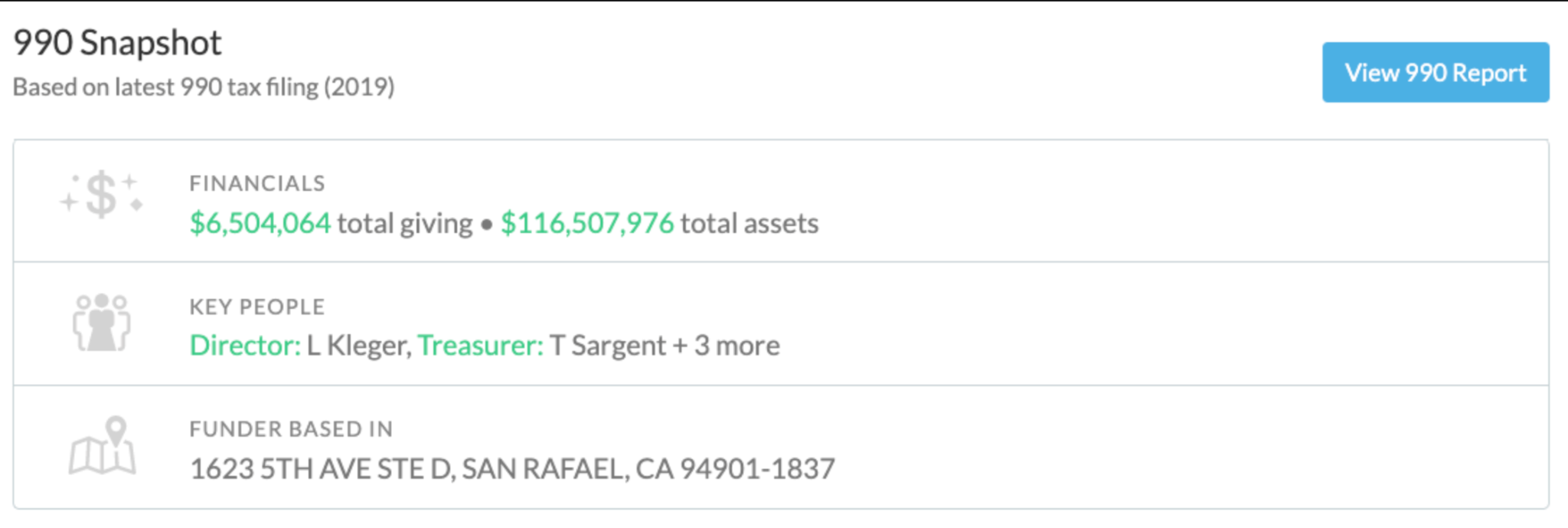
Researching each funder's priorities is the slowest part of writing a tailored LOI. Instrumentl's funder profiles pull giving history, funding areas, and grant sizes from 990 data into a single view, so you can confirm fit and calibrate your ask before you write.
A letter of inquiry for a grant is a brief one- to two-page document sent to a grantmaker to summarize your organization, the need you address, and your funding request. Funders use it to decide whether your work fits their priorities before inviting a full proposal.
How Long Should a Letter of Inquiry Be?
Most are one to two pages, or about 400 to 800 words. Aim for one page unless the funder specifies otherwise. Being concise while covering the essentials matters, since funders review many letters at once.
What's the Difference Between an LOI and a Full Proposal?
An LOI is a short pitch that establishes fit; a full proposal is the complete case, with detailed methodology, a full budget, and an evaluation plan. Funders often use the letter of inquiry to screen for alignment before requesting the longer document.
What Tone Should I Use in a Letter of Inquiry?
Professional but approachable. Show confidence in your project while respecting the funder's time and following their guidelines. Write as if the reader knows nothing about your organization yet.
When Should I Follow Up on a Letter of Inquiry?
If you haven't heard back after a few weeks, a polite follow-up is usually welcome, as long as it respects any timeline the funder published. Keep it short and reaffirm your interest.