Navigate the complexities of crafting an effective grants strategy with practical examples and expert advice. Learn how to set strategic, achievable goals for your nonprofit to advance its mission. Whether you're a new grant professional or a seasoned pro, empower yourself to view grants as a tool for achieving broader organizational objectives. Let's refine your approach and maximize your impact!

TOPIC
AUDIENCE
“Crafting an effective grants strategy is so easy!” Said no one, ever.
As a grant professional, you surely know that developing a strategy and setting goals can be a challenge. Trust me, I can relate!
Here’s the good news: this article can guide you through some of these complexities, offering practical examples and expert advice to help you set strategic, achievable goals for your nonprofit.
The strategies we will share aren’t just about securing funds for short-term financial needs; they’re about using grants strategically to advance your nonprofit’s mission.
Whether you’re a new grant professional or a seasoned pro that’s looking to refresh and refine your approach, we want to empower you to view grants as a tool for achieving your organization’s broader goals.
Let’s take this journey together! Ready? Let’s go!
One of the primary goals for any nonprofit organization should be to diversify its revenue streams.
Why? Because relying too heavily on one source of funding can be risky. If that funding stream dries up, your nonprofit is left without any revenue streams to fall back on.
Here are some key funding streams that your nonprofit should incorporate:
Here’s the bottom line: by diversifying your revenue streams, you can reduce dependency on any single source and create a more stable financial foundation for your nonprofit. For advice on how to incorporate grants into your fundraising strategy, check out this guide: Grant Strategy: Building a Year-Long Funding Plan for Your Nonprofit.
Many nonprofits aim to expand their programmatic impact but lack the resources to do so successfully and in a sustainable way.
Here’s the good news—Grants can serve as a catalyst for innovation and growth, allowing your nonprofit to expand its reach and better serve your community. Your ability to leverage grant funds strategically is key to breaking barriers and reaching underserved populations.
Grants—particularly programmatic grants—can be used to develop and expand programs within your community.
This all sounds great, but you might find yourself wondering how to get started with pursuing these types of grants.
Industry expert Rachel Grusin, Project Coordinator at the Legal Aid Society of San Diego, shared this hypothetical scenario with us that will help paint a clearer picture for you:
“Suppose a nonprofit, “Community Arts Initiative”, runs various arts education programs in underserved communities. They could approach a local foundation known for supporting arts and community development. In their proposal, they could highlight their significant community impact over the years, showcase testimonials from program participants, provide clear financial records, and articulate how general operating funds will allow them to expand their reach, improve program quality, and increase organizational capacity.”
Furthering your impact is exciting, but we want to share a word of caution with you as well. It’s critically important that you avoid falling into the trap of “mission creep” or “chasing the money”, which can damage your nonprofit’s long-term sustainability.
Grants play a pivotal role in strengthening organizational capacity by allowing organizations to make strategic investments, rather than simply covering immediate financial needs.
Here are a few ways that capacity grants grants can strategically support broader organizational goals:
By leveraging grants for capacity-building, you can guarantee greater resilience and effectiveness in fulfilling your organization's mission.
4. Advancing Advocacy and Policy Goals
For many nonprofits, advocacy and policy change are central to their mission. By securing grants, they can fund campaigns, research initiatives, and legal efforts aimed at advancing their policy agenda and creating meaningful change.
Here are a few examples:
5. Collaborating and Building Partnerships With Other Organizations
Collaboration is essential for addressing complex societal challenges. Don’t believe me? I wrote an entire dissertation about it! Practitioners and researchers both agree that it is much easier to move the needle on tough societal issues when you’re working collaboratively rather than in a silo.
By creating successful nonprofit partnerships that are aligned with your grant strategy, you can amplify your impact and strengthen your organization’s ability to achieve its goals.
Here are some practical tips on how to leverage partnerships to enhance your nonprofit’s grant strategy:
For example, my nonprofit organization focuses on dropout prevention in school districts with low graduation rates and/or high dropout rates. Recently, after encountering a student who had stopped attending school because he couldn’t see the whiteboard, we sought out a partnership with a nonprofit organization that provides vision screenings to students. Together, we hosted vision screening clinics at no cost to students across 5 different school districts in our shared territory. Voila! This partnership helps my organization keep kids in school and helps the vision screening organization reach more students.
6. Improving Organizational Sustainability
As a grant professional, you surely understand the burden of worrying about day-to-day expenses. I would bet that you’re no stranger to the constantly-looming-dread of financial uncertainty.
Listen—you’re not alone! I can absolutely relate to those feelings. But here’s the good news: grants offer opportunities to alleviate those concerns and enable your organization to focus on delivering impactful programs and services in a sustainable way.
Pro Tip: Instrumentl makes it easy to identify funding opportunities specifically tailored to cover operational costs. Simply select what you will use the funds for and let Instrumentl’s smart matching system do the rest!
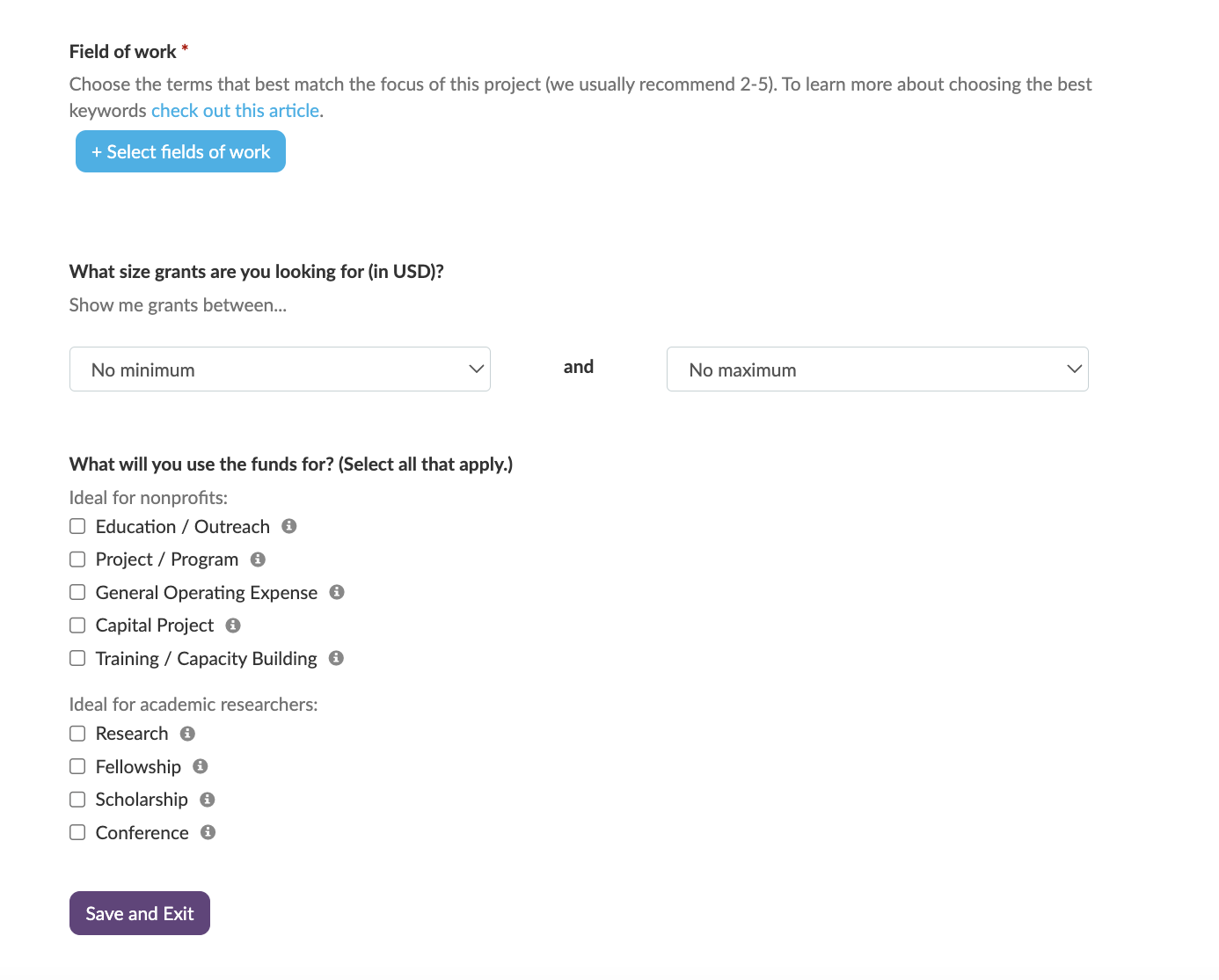
Whether you're looking to expand programs, replace lost funding sources, or improve financial management practices, grants can provide the support needed for sustainable growth and impact.
7. Enhancing Visibility and Recognition in Your Community
Grants not only strengthen financial stability but also boost your nonprofit’s visibility and credibility in the community.
Securing prestigious grant awards can help to solidify your standing in the community and even open doors to new opportunities for growth and collaboration. Here are some examples how:
By strategically leveraging these tactics, you not only enhance your organization’s visibility, credibility, and reputation but also create opportunities for sustained growth and impact.
8. Measuring and Evaluating Impact
In today’s landscape, measuring impact is increasingly important for nonprofits, but it can also be a daunting task.
Grants provide essential support for rigorous evaluation efforts, helping organizations gather data to refine their programs and services, ensuring maximum effectiveness and impact.
As a grant professional, you play a huge role in identifying funding opportunities to assist your colleagues in developing evaluation frameworks. This may mean narrowing your grant search to focus on opportunities that support capacity building and evaluation efforts.
In addition to targeted grant research, you should also keep in mind the importance of knowledge sharing and dissemination.
Don’t forget to develop strategies to share your evaluation findings and insights with internal and external stakeholders. Use storytelling, data visualization, and reports to communicate your nonprofit’s impact and effectiveness.
Wrapping Up
Crafting an effective grants strategy and setting strategic goals is not an easy task. However, it is a crucial step for any nonprofit seeking to achieve its mission.
By strategically leveraging grant funding, you can support your organization in achieving sustainable growth, impact, and mission fulfillment. Remember—it’s essential to think beyond immediate financial needs and begin considering how grants can support your organization’s broader objectives.
Now, you’re ready to begin harnessing the power of grants to make an even bigger impact on your organization and your community. Happy grant seeking!
Table of contents

