Discover the secrets of an in-kind donation, and learn how to successfully secure in-kind donations from companies to support fundraising events.

TOPIC
AUDIENCE
Just because a monetary donation may not be in a company’s budget doesn’t mean that all hope is lost. You still may be able to secure an in-kind donation from them to support your nonprofit. And that can be just as good—if not better!
Renee Zau, CEO and co-founder of DonationMatch, a platform that helps streamline the in-kind donation process, offered her expert opinion during a webinar with Instrumentl: What Companies Want: Secrets to Securing In-Kind Donations for Fundraising Events.
Now, we’ll take her insights to provide you with practical strategies and insider tips on securing in-kind donations successfully. In this article, you’ll learn:
Sound good? Let’s jump in!
Before we get started, let’s discuss exactly what an in-kind donation is.
An in-kind donation is a non-monetary donation to a nonprofit in the form of goods and/or services.
Typically, these donations are from companies that have some type of good or service they can provide, though individuals can also contribute this way. These donations still have value, and you must provide a tax receipt to donors in recognition of their contribution. This amount would reflect the value of the donation if it were resold at a fair market rate.
So, what are some examples of nonprofit in-kind donations?

Google’s Community Space is available for qualifying nonprofits in the San Francisco Bay area.
Regardless of the type of goods and services being exchanged, in-kind donations make it easy for anyone to get involved with a nonprofit, even if they don’t have the means to make a cash donation.
We go in-depth about everything you need to know about what an in-kind donation is in this guide, so check it out if you need more context.
In-kind donations are a great way to help fill specific needs within your organization. And not only do they provide your nonprofit with value, but they can also benefit the corporations that give them.
For corporations, giving in-kind donations can improve their reputation, help them further their corporate social responsibility efforts, and help build a culture that their employees are proud to be a part of.
Companies are able to step up, helping the community around them by giving back in ways that only they can. This garners goodwill within the community, fostering connections that will yield dividends in the long run.
In-kind donations really are a win-win for both parties, so don’t be afraid to solicit them. Put together a list of things most in need and share it with your community.
It’s not always about what nonprofits need when it comes to securing in-kind donations; it’s also about what companies want. Renee Zau does a great job of breaking down corporate donations for nonprofits, including what companies consider when they are deciding whether to make in-kind donations.
Here’s a breakdown of the top four things companies look for when considering donating in-kind.
Donors want to feel like you respect them when you are soliciting them for donations. That includes reviewing the requirements to make sure that your missions align. There is often more demand than they have the capacity to give, so when you blindly solicit them regardless of fit, they may feel like you don’t care about them outside of what they can do for you.
“[Companies] love giving to the right organizations that meet their priorities and focuses at that moment.” - Renee Zau
To find out what these are, Renee suggests doing research. Look up things like:
Many companies have clearly listed on their website when, what, and who they are willing to donate to, so make sure that you qualify. You may do more harm than good if you submit requests for in-kind donations if you do not meet their minimum requirements.
For example, Bi-Right Market does a great job of outlining their minimum requirements on their website. If you do not meet them or cannot meet them, then you should seek alternatives rather than applying and wasting everyone’s time.

Bi-Right Market has a clear list available to guide nonprofits through the process of applying for in-kind donations.
Understanding potential donors from the start sets a solid foundation for a lasting relationship.
If it’s too complex or challenging to donate, many companies will often move on.
Here are a few ways that you can ease the donation process from Renee:
You want your donors to be excited about making nonprofit in-kind donations, so do what you can to ease the process for them to maximize your results.
Now that you’ve secured the donation, you have to make sure that you meet their expectations in using it.
Some nonprofits fall short of this by:
Ultimately, if there is no perceived impact on the business or the community, you are often not meeting the company’s expectations when they make an in-kind donation.
So, what can you do instead?
At the end of the day, keeping in contact with in-kind donors will help you strengthen the relationship and build trust.
Share your gratitude loud, proud, and frequently!
Feeling appreciated and garnering public recognition is the primary reason most companies give, so you really need to lean in. One big way that you can thank your donors is online through social media.
Renee offered some tips to help you make the most of these posts:
Remember, a simple thank you can go a long way in securing in-kind donations for the long term. And make sure you ask your donors how they prefer to be recognized to show you respect their wishes.
“Just being known as a company that's very generous, that cares, and supports the community is really what they want...From the very first donation you receive, put something out publicly. Thank them on social media or on your website. Start listing the companies that are donating to you so others can see the list growing.” ” - Renee Zau
By providing unique opportunities for your in-kind donors to feel appreciated, you’ll set your organization up for success.
Preparing Your In-Kind Donation Request
The good news is that preparing your in-kind donation request is much like preparing a grant proposal! You should be very familiar with the process, but here are some tips you can follow to get ready to make your ask:

Habitat for Humanity’s in-kind donation page makes it clear how to make in-kind contributions, including what they are looking for and how to get it to them.
The more prepared you can be, the better.
Making the Ask: Techniques and Best Practices
Now that you have all of your information prepared, it’s time to make the ask and draft your request.
One of the best ways to make your request stand out is by aligning your ask with their corporate goals. How can you do this?
Even if it’s a no, take it as a not right now. Stay engaged with them by signing up for their newsletters, subscribing to their social media channels, and more. Their priorities may change, and if you stay engaged, you could be top of mind for future consideration.
Leveraging Technology to Manage Donations
You don’t have to do it alone. There are fantastic resources available that can help make securing in-kind donations even easier.
Instrumentl can help you track and manage in-kind donations efficiently, allowing you to organize your end-to-end workflow. You can set tasks to help with the initial request, store documents, track deadlines, and more.
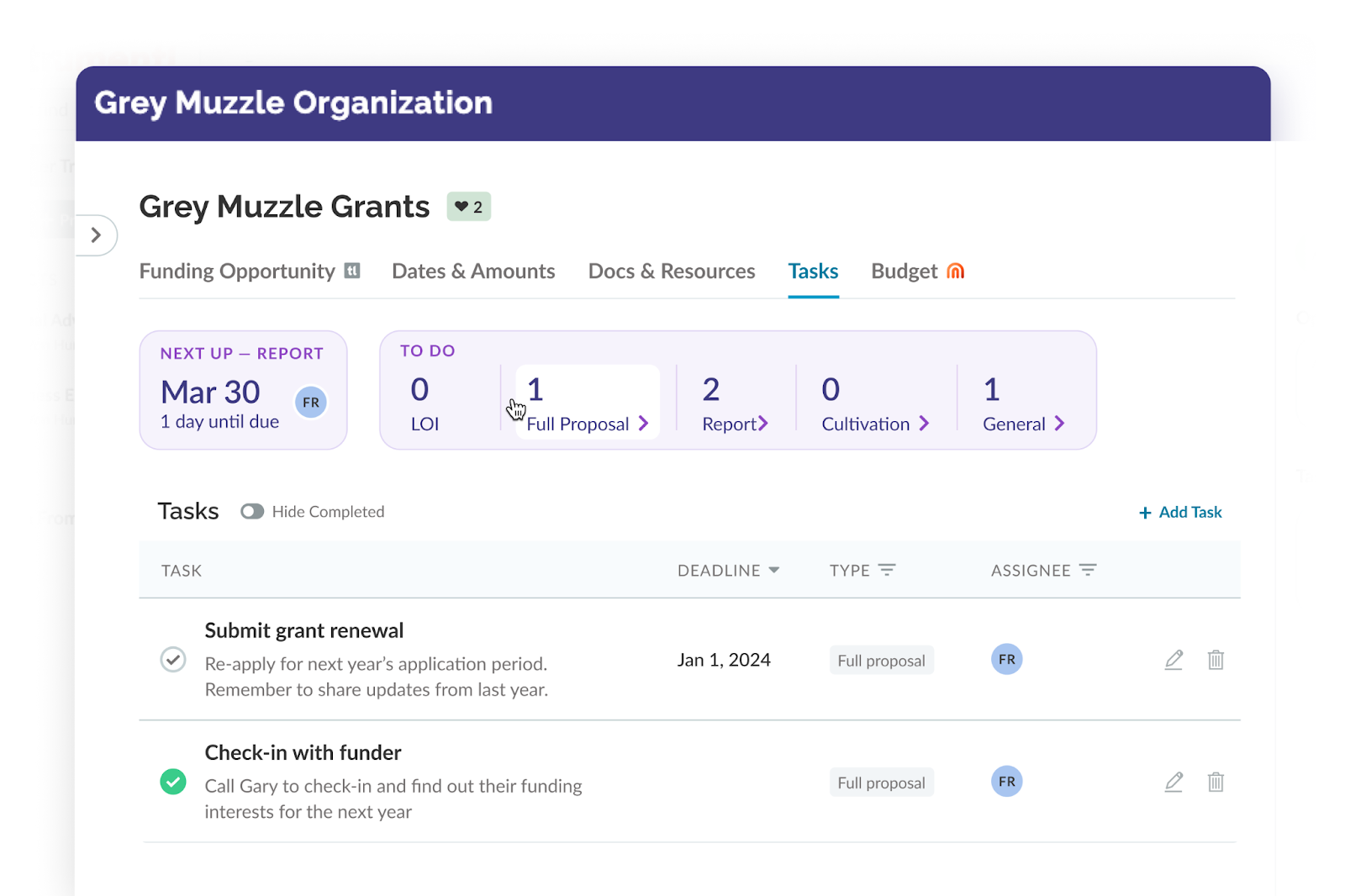
Instrumentl’s task view can help you manage your in-kind donation process.
DonationMatch can be used to help streamline your requests and manage relationships. It’s a great resource that helps connect your nonprofit with in-kind donors. They believe generosity shouldn’t be hard, so they help with compliance screening, fulfillment, follow-ups, and so much more to help others give back.
“Handling requests can be time-consuming, and that's why DonationMatch exists. By taking away some of the time-consuming tasks like vetting organizations and collecting all the information they want to make their decisions, we help [companies] make decisions faster, which is hopefully beneficial to you.” - Renee Zau

DonationMach has solutions for both nonprofits and companies, facilitating more than $170 million in donations.
Don’t be afraid to introduce technology into your workflow. It can help save you time, avoid duplicate efforts, and drive efficiencies to help secure donations quicker.
Wrapping Up
In this article, we shared expert insights from Renee Zau on how you can secure in-kind donations, including how to prepare, ask, and acknowledge in-kind donations, as well as how to leverage technology to enhance the process.
By adopting the outlined strategies in this article, you can enhance your fundraising efforts and build sustainable partnerships that will be mutually beneficial in the long term.
Instrumentl is here to help. If you’re ready to put us to the test and help you track and manage your in-kind donations, as well as secure new grants, sign up for our free, 14-day trial today!
Table of contents

