In this post, we'll dig into what makes a strong grant proposal, effective tips you can use to plan grant proposals better, and give you techniques you can use to bolster your proposals.

TOPIC
AUDIENCE
You're a grant reviewer, faced with a towering stack of proposals, each vying for limited funds. The clock is ticking, and only a select few can win. Now, picture your application buried in that pile. How do you make it stand out?
In this article, we’ve compiled 24 practical tips from grant writing experts to make your proposals standout. The tips are:
Want to unpack each tip? Let’s dive in!

Whether you’ve been writing grants for a while or you’re learning how to become a grant writer, you may have heard of the 5 Rs of grant writing: readiness, research, relationships, writing, and reporting.
These high-level themes are woven into all winning grant proposals. Below, you’ll see them come up again and again in our tips.
“By failing to plan, you are preparing to fail” - Benjamin Franklin
Not following all the directions will most often disqualify your proposal altogether.
Before you begin working on your proposal, make sure to adhere to all funder requirements, including:
Also, make sure to pay close attention to grant proposal questions, addressing them precisely as requested.
Time management is crucial when writing a grant proposal, especially for beginners who may underestimate the effort required.
Having the documents you need readily available will allow you to save time and concentrate on the proposal's core content. At its most basic, have these documents ready for every proposal:
It is also important to research information related to the funder to help strengthen your grant proposal.
Jacob B. Chase, CEO of Chase Consulting Solutions, emphasizes how important it is to research potential funders as it will help you better understand what the funder is actually looking for in a proposal.
He advises studying their:
Investigate the funder's previous grantees, values, and mission statement. Understand their objectives, target audience, and the types of projects they typically support. This information will help you align your proposal with their goals. Be sure to customize your proposal to address the specific values highlighted by the funder.”
Pro Tip: Instrumentl’s foundation profiles distill information from funders’ 990 forms in easy-to-read graphs and charts. You can see a funder’s history of giving, giving by location, average grant amount, and more, all in one convenient location!

Learn more about what makes Instrumentl different.
To map out your goals, leverage the SOAR Model.
Taking time to determine your nonprofit’s Strengths, Aspirations, Opportunities, and Results can help you create actionable goals for your nonprofit’s grant strategy.
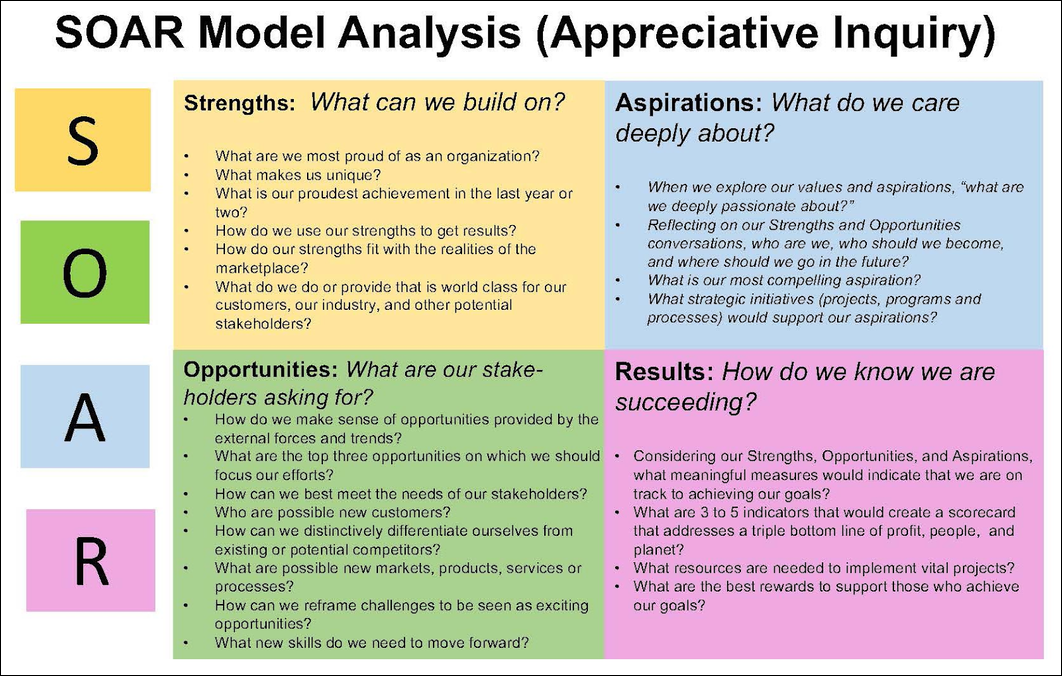
Rachel Werner, CEO of RBW Strategy, has over 18 years of grants and recommends you ask these questions when completing the SOAR analysis:
What are the assets your organization brings to the table, and how do we know that we're going to succeed? Where can we capitalize and leverage our positioning? What do we really care deeply about? Thinking about this is an interesting exercise for you and your team.”
Having a thorough understanding of your organization’s goals and priorities will help you write a grant proposal with more clarity and purpose.
If you’re struggling with writer’s block, use the foundation's scoring criteria as your main headers.
This tip is shared by Holly Rustick in her workshop, 7 Tips to Write Grants Like a Pro. Using these headers not only provides a clear structure for your proposal but also ensures that your content aligns seamlessly with what grant reviewers are looking for.
Persuasion Techniques for Compelling Grant Proposals
Now let’s spend some time going over tips that can help you make your grant proposals more persuasive and compelling.
One of the best things for beginner grant writers to remember is that grants are heavily based on relationships, and having a relationship with a funder can help your proposal stand out.
To start forming relationships with funders, invite them to your events so they can see the impact of your mission firsthand.
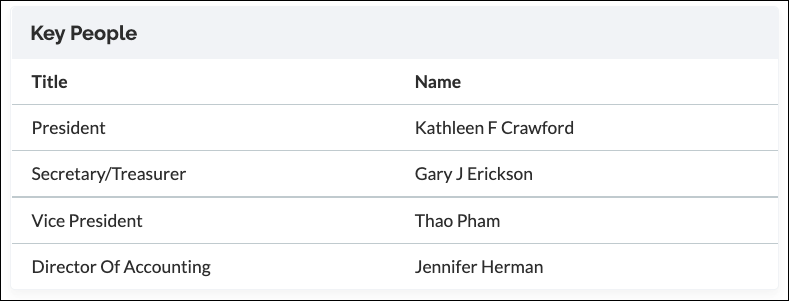
Pro Tip: Instrumentl lists key people in all of its foundation profiles so that you can easily identify key contacts to reach out to!
Check out our webinar with Scot Scala, GPC, M.Ed., and GPA Approved Trainer, for more strategies for building relationships with funders.
Including strong partnership letters in your grant application can significantly enhance your proposal's appeal. Funders look favorably upon collaborations between nonprofits and other entities, sometimes even mandating them for eligibility.
In her workshop, Getting Stellar Support Letters for Your Grants, Rachel Waterman explains how you can secure more support letters by building a strong system like this:
One of the best ways to increase the chances of success in your grant proposal is to ask the funder meaningful questions.
In her workshop, How to Go From 100+ Grants to The Best Fits for You: The Grant Writing Unicorn Method, Meredith Noble shares seven such questions that can help you connect better with funders:
The answers to these questions can give you a better understanding of their priorities and requirements, which can help you tailor your grant proposal accordingly.
Another persuasion technique that may help your grant proposal stand out is explaining why your organization is the best qualified to carry out your proposed project.
You can effectively demonstrate your nonprofit’s qualifications by including information on the following items in your proposal:
A well-researched, detailed grant budget shows funders you’ve thought carefully about your proposed project. It’s also an opportunity to demonstrate how you'll leverage requested funds strategically.
In his workshop, Behind the Grantmaker’s Curtain: What Funders Want, Matt Hugg emphasizes that a budget is more than just a list of expenses. It’s a tool to show how well you understand your mission and those you serve.
To ensure you build a strong budget, Matt recommends:
Remember, it's not just about the numbers; it's about creating a compelling narrative that aligns with your goals and resonates with funders.
Storytelling Principles to Apply to Your Grants
Another key thing to remember about writing successful grant proposals is that grant writing is storytelling. Here are a few storytelling tips for grant writing success:
When writing your grant proposal, it is important to tell your story as if those reading it have no prior knowledge of your nonprofit or project. Don’t assume that the funders are familiar with your organization or the work it does.
Make sure in your proposal to share your:
Ultimately, the story that you tell needs to provide enough detail about your nonprofit to demonstrate to funders why you are the best fit to complete your proposed project.
Another storytelling principle you can apply in your grant proposal is to utilize emotion. If it is applicable to your work, use emotive language to pull at the funder’s heartstrings. Helping the reviewers form an emotional connection with your nonprofit and your project will help your proposal stand out.
This feelings wheel is a great resource you can use to come up with powerful and emotive language to describe your nonprofit and the work it does.

Even if the work of your organization is not something that typically elicits an emotional response, help the reviewers feel your passion for your mission. Write in such a way that those reading your proposal will understand why you are so enthusiastic about your project.
Data isn't just numbers—it's a powerful storytelling tool in grant proposals.
Use data to illustrate the project's significance and persuade the funder toward investment. Include results from past work, comparable project outcomes, or demographics of your target audience.
Advanced Tip: Enhance your proposal with a QR code linking to a customized landing page packed with detailed data using secure tools like Beaconstac's QR Code generator.
Admitting your weaknesses and identifying potential challenges will help keep your story authentic.
While it is helpful to list potential solutions to any challenges, you can also be honest if there is not a clear answer. Funders appreciate honesty from applicants, and admitting challenges will help increase your credibility with the funder.
Proofreading Tips for Better Grant Proposals
The grant proposal is your chance to showcase your strengths, and you don’t want discrepancies or simple errors in writing to be the deciding factor in whether your work gets funded. The following proofreading tips for writing grant proposals can significantly help you draft stronger applications.
Simple errors such as incorrect math or calculations are an easy way for your proposal to be removed from the running. If you are interested in making your grant proposal stronger, spend some time checking your budget for mathematical errors.
Grammar and spelling errors will undermine all your work. Ask another staff member to read your proposal before submitting it.
Many grant proposals require both a project narrative and a budget narrative—and both of them should tell the same story. Their alignment will assure funders that you've thoroughly planned your budget to match project goals.
For example, if you talk about staff needing to travel in your project narrative, there should be a line item for travel costs in your budget.
It can be very helpful to have your proposal reviewed by someone outside your organization (or even a board member less familiar with day-to-day operations).
Since a strong grant proposal is meant to tell your story to someone who may have no prior knowledge of your nonprofit, an outside opinion can be very beneficial. The reader can tell you how well the proposal reads and whether it makes sense with less knowledge of the nonprofit and proposed project.
Founder and CEO of Thread Strategies, Loree Lipstein, suggests that the best way to write compelling grant proposals is to shorten your writing style. She says that while the length of your grant proposal matters, a short and snappy version is more effective than a long and thorough one.
Length matters, and short and snappy is more effective than long and thorough. There is a human on the other end of your grant application, and you should be thinking about how humans take in information quickly and easily.”
Here are some of her tips:
Goal Setting Tips for Stronger Grant Proposals
In any grant proposal, it is important to set strategic goals and objectives that resonate with funders. We have included a few tips for goal setting to help you create a stronger grant proposal.
One good way to strengthen your grant proposal is to create SMART (Specific, Measurable, Attainable/Achievable, Realistic, and time-limited) goals or objective statements.
In her session on Connecting Smart Project Goals, SMART Objectives, and Grant Research Keywords, Dr. Bev Browning shared this formula for writing SMART objective statements:
By the end of ____, increase __% or more as demonstrated by ______________.
For instance, instead of writing “Increase hot meal deliveries by 100%”, you could write this instead:
“By the end of year 1, increase the percent of the City of Merced’s low-income senior citizens receiving hot meal deliveries by 25% or more as demonstrated by the number of eligible individuals completing applications, number of new hot meal deliveries, number of new zip codes served, and number of senior citizens affordable housing complexes signing up for residents to receive the funded delivery services.”
Evaluation has become increasingly important to funders in recent years. Funders often require more accountability when it comes to the impact of your work.
It’s important in your grant proposal to detail exactly how you will evaluate the results of your project and their alignment with your goals. You should be able to clearly articulate how you will measure the success of your project—including what specific metrics you will use.
Related: Check out our previous blog post about evaluation methods for additional insights.
While it might be tempting, it’s essential to avoid overambitious claims in your grant proposal.
Setting achievable and realistic goals will enhance the credibility of your proposal. It will also demonstrate a clear understanding of your organization's capabilities.
On the other hand, creating too many goals can:
Tips to Ask for Funder’s Feedback
Whether you actually win the grant or not, it is important to seek some feedback from the funder to analyze what worked in your grant proposal and what did not.
Below are two final tips for how to get the most out of a funder’s feedback.
Most grant writers never really ask for feedback, and those who do, often ask the wrong questions—resulting in no response from the funder.
In her workshop, Funder Feedback: Ask the Right Way – to Get the Right Results, Maryn Boess shares an effective method to get meaningful feedback from funders.
Take a look at the following examples she shares:
According to Maryn, the 2nd question is much more likely to get a response from the funder because it comes from an open mindset that is focused on improving your applications in the future.
If your grant proposal is rejected, remember that a no doesn’t mean “never.”
According to Pamela Grow, Founder of Simple Development Systems and Basics and More Fundraising, if your proposal is declined, pick up the phone and call the funder.
Ask them these three questions:
For more strategies for handling rejection, check out this guide on responding to grant rejection letters.
Wrapping Up: Use These Tips To Write Winning Grant Proposals
We hope you can use the strategies and advice that we have provided to write stronger grant proposals and increase your grant success.
Make sure to follow the funders’ directions, set clear goals, and proofread your final draft. And even if you don’t succeed, remember to always ask for feedback so you can keep improving and moving forward.
Key components include a clear and compelling narrative, detailed and realistic budget, defined goals and objectives, supporting data, and alignment with the funder’s priorities.
Tailor your proposal to the specific funder by addressing their mission and guidelines, demonstrating the impact of your project, and using concise, engaging language free of jargon.
Common mistakes include failing to follow funder guidelines, submitting incomplete proposals, overestimating budgets, and not providing measurable outcomes.
The budget section is critical as it provides funders with transparency and demonstrates that you have a well-planned and realistic approach to managing the grant funds.
The needs statement should clearly outline the problem your project addresses, supported by data and research, and explain why your organization is uniquely positioned to tackle it.
Table of contents

